This guide explains how to motivate homeschool students using practical strategies that build autonomy, confidence, and genuine interest in learning. Parents will learn how to use choice, real-life activities, movement, routines, rewards, and independence while recognising burnout, resistance, and motivation challenges in middle school students.
Almost every homeschool parent hits the same wall at some point. Your child sits down at the table, stares at a math page, and simply will not engage, no matter how many times you ask. It is one of the most common struggles in homeschooling, and it has almost nothing to do with intelligence or ability.
For parents considering home education, it helps to start with a clear understanding of what homeschooling involves. What Is Homeschooling? explains how learning at home works and what families can expect.
This guide explains why motivation works differently at home than it does in a traditional classroom, and it gives real, practical strategies you can use starting today.
You will learn why rewards alone rarely fix the problem, what actually drives a child to want to learn, and how to adjust your approach for a middle school age student specifically.
Motivation is not a personality trait some kids simply have and others simply lack. It shifts from day to day, subject to subject, and even hour to hour, based on things like sleep, interest, difficulty level, and how much say a child feels they have in their own learning.
Once you understand the idea of homeschooling, the next question is often where to begin. How to Start Homeschooling takes you through the basic steps, from planning lessons to creating a workable learning routine.
Why Motivation Looks Different in a Homeschool
In a traditional classroom, a lot of motivation comes from outside pressure. Grades, peer comparison, a teacher watching, and a strict bell schedule all push a student along, whether they feel like working or not.
At home, most of that outside pressure disappears, which is actually a good thing, but it means a parent has to find a different way to spark real engagement.
This is not a flaw in homeschooling. It is simply a different system, one that relies more on genuine interest and internal drive than on external control.
Once a parent understands this shift, motivation problems become much easier to solve, because the goal is no longer forcing compliance. The goal becomes building a child’s own reasons to want to learn.
This shift also explains why strategies borrowed straight from a traditional classroom, like strict grading curves or public comparison between students, often fall flat at home.
Choosing between home education and a conventional school can be a difficult decision. Our guide to Homeschooling vs Traditional School looks at the differences in learning, routine, flexibility, and parental involvement.
A homeschool of one or a few children simply does not have the same social pressure a large classroom naturally creates, so leaning on classroom style tactics tends to disappoint both the parent and the child.
Building motivation at home calls for a different toolkit, one built around interest, ownership, and connection rather than competition or outside authority.
The Three Ingredients Behind Real Motivation
Decades of research on human motivation, much of it built around a framework called self determination theory, point to three basic needs that drive genuine engagement in any setting, including a homeschool.
Autonomy. People, including children, work harder and enjoy tasks more when they feel some control over how or when the task gets done. A student who is told exactly what to do every single minute of the day, with zero say in the matter, naturally resists more than a student given some real choices.
Competence. Nobody enjoys feeling constantly confused or behind. When a child experiences small, real wins, completing a problem set correctly, finishing a project, understanding a tricky concept, motivation grows on its own. Tasks that are either far too hard or far too easy both damage this sense of competence.
Relatedness. Learning feels more worthwhile when it connects to something a child actually cares about, whether that is a personal interest, a family goal, or a real world use for the skill being taught.
Nearly every practical tip in this guide connects back to one of these three ingredients. Keeping them in mind helps you understand why a particular strategy works, not just what to do.
Quick Reference: 15 Ways to Motivate a Homeschool Student
Use this table to scan the strategies covered in this guide, then read the full sections below for more detail on each one.
| # | Strategy | How to Use It |
| 1 | Give your child real choices | Offer genuine options in order, format, or method |
| 2 | Connect lessons to real life | Tie subjects to recipes, budgets, real writing tasks |
| 3 | Break big goals into small wins | Use checklists or progress charts for long projects |
| 4 | Use a visible, predictable routine | Post a general daily order, not a rigid clock schedule |
| 5 | Match format to learning style | Swap worksheets for video, discussion, or hands on work |
| 6 | Let curiosity lead sometimes | Build a unit study or project around a real interest |
| 7 | Build in movement | Add short breaks, walks, or active review games |
| 8 | Use rewards wisely | Pair small privileges with real talk about effort |
| 9 | Celebrate effort, not just results | Praise persistence and problem solving, not just scores |
| 10 | Address the root cause of resistance | Check hunger, sleep, task difficulty, and overload first |
| 11 | Offer more independence in middle school | Let a middle schooler manage their own checklist |
| 12 | Connect work to bigger goals | Link daily tasks to future plans or personal interests |
| 13 | Ask what is and is not working | Hold a short weekly check in conversation |
| 14 | Protect social time | Keep peer connection on the calendar, not just academics |
| 15 | Watch for burnout signs | Simplify the plan early instead of pushing through |
Give Your Child Real Choices
Choice is one of the fastest ways to boost motivation, and it does not require giving up control of the curriculum. Even small choices count. Your child could choose which subject to start with, whether to write an essay by hand or type it, or which of two related books to read for a history unit.
Every child learns differently, and what works well for one student may not suit another. If you are considering homeschooling, Is Homeschooling Right for My Child? explores the factors that can help you make a more informed choice.
The key word is real. Offering a fake choice, where every option leads to the exact same outcome, does not build the same sense of ownership. Aim for choices that actually change the experience in a way your child can feel.
A simple way to start is offering two or three genuinely different options each morning and letting your child pick the order or format. Over time, many parents find that even a five minute conversation about the day’s plan, where the child has real input, saves far more time than it costs, since the child starts the day with buy in instead of resistance.
Connect Lessons to Real Life
Abstract lessons that never seem to matter outside of a workbook are some of the hardest material to stay motivated about. Whenever possible, tie a lesson to something practical and visible.
Fractions become more interesting when they show up in a real recipe. Persuasive writing feels more useful when a child is arguing for a real privilege they actually want. Budgeting math means more when it is tied to real spending money.
This connection does not need to happen in every single lesson, but sprinkling in real world application regularly keeps a child from feeling like school is a separate, pointless activity disconnected from actual life.
For a middle school age student in particular, real world connection can extend to bigger projects, like planning a simple family trip budget using math skills, writing a real letter or email to request something they actually want, or researching a topic tied to a hobby they already love.
The more a lesson resembles something an adult might genuinely need to do, the more seriously an older child tends to take it.
Break Big Goals into Small Wins
A distant goal, like finishing an entire math textbook by June, rarely feels motivating in the moment. Small, visible progress does. Break large assignments and long term goals into smaller checkpoints your child can actually see themselves completing.
A simple progress chart, a checklist with boxes to mark off, or even a jar that gets a marble added for each completed task can make progress feel real and rewarding, especially for a child who struggles to stay engaged with big, vague goals.
This approach works especially well for long projects, like a research paper or a full unit study, where the finish line can feel impossibly far away at the start.
Breaking the project into stages, research, outline, draft, revision, final copy, and celebrating the completion of each stage separately keeps momentum going instead of letting the whole project feel like one overwhelming task sitting untouched for weeks.
Use a Visible, Predictable Routine
Uncertainty drains motivation quickly. A child who does not know what comes next, how long a task should take, or when the school day actually ends often feels scattered and reluctant to start anything at all.
A simple visible routine, posted somewhere your child can see it, removes a lot of that friction. This does not need to be a strict, minute by minute schedule. A general order, like hard subject, short break, easier subject, lunch, project time, gives enough structure to feel predictable without becoming rigid.
Many families find that involving the child in building this routine, rather than simply handing down a finished schedule, adds a helpful layer of ownership on top of the predictability.
A ten minute planning conversation on Sunday evening, where the child helps decide the order of the coming week, often pays off across the following five days.
Match the Format to How Your Child Learns
Every child absorbs information a little differently. Some children genuinely enjoy quiet, focused reading, while others need movement, conversation, or hands on activity for a concept to stick.
Forcing every subject into one single format, especially worksheets and written pages, can make an otherwise capable child seem unmotivated when the real issue is simply a mismatch.
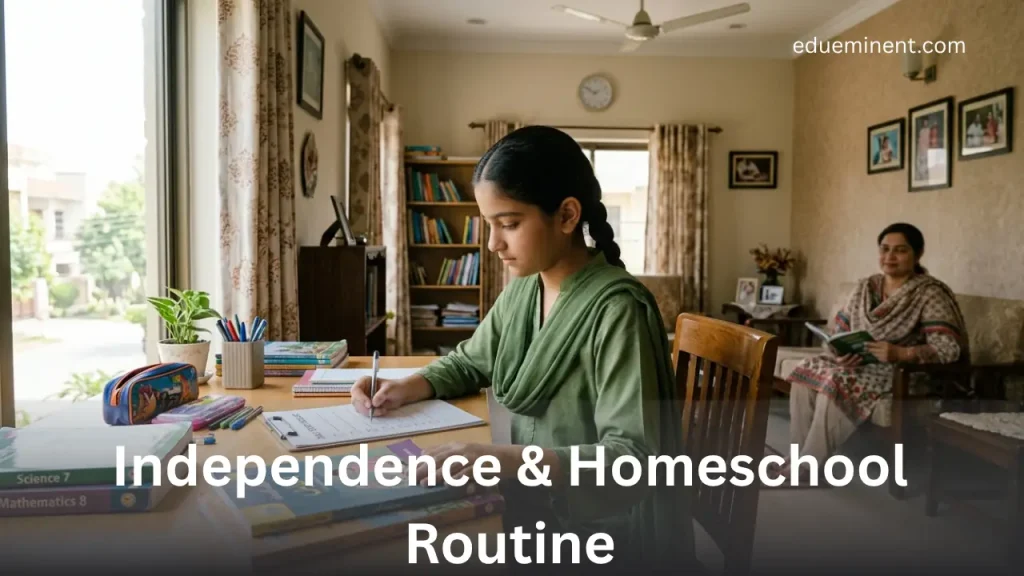
Pay attention to when your child seems most alert and engaged. A documentary, a hands on experiment, a game, or a discussion out loud can teach the exact same concept as a worksheet, often with far more genuine interest attached.
It also helps to remember that learning style preferences can shift over time and even change by subject. A child who reads happily for a history lesson might need a completely different format for math, and that is perfectly normal.
The goal is not to permanently label a child as one type of learner, but to stay flexible and notice what actually works lesson by lesson.
Let Curiosity Lead Sometimes
Homeschooling has a built in advantage that a classroom of thirty students simply cannot offer, real flexibility to follow a child’s genuine interests. If your child becomes fascinated with volcanoes, sharks, ancient Egypt, or coding, let that curiosity guide a unit study or a research project instead of insisting on the exact next page in a curriculum.
This does not mean abandoning required subjects. It means occasionally letting a child’s own questions become the entry point into a lesson, which almost always produces more enthusiasm than a fully prescribed assignment.
A practical way to build this in is setting aside a regular block of time, even just one afternoon a week, for a passion project the child chooses entirely on their own, as long as it involves some reading, writing, or research along the way. Many parents are surprised at how much genuine academic skill practice happens naturally once a child is fully invested in the topic.
Build In Movement and Hands On Learning
Sitting still for long stretches is hard for most children, and middle school age students in particular often focus better with regular movement breaks built in.
Simple additions, like a short walk between subjects, a hands on science experiment instead of a reading passage, or even standing up while reviewing flashcards, can noticeably improve focus and willingness to engage.
Movement is not a distraction from learning. For many children, it is part of how real learning happens. Something as simple as reviewing spelling words while bouncing a ball, doing multiplication facts while jumping rope, or taking a five minute outdoor break between subjects can reset a child’s attention far more effectively than pushing through in a chair.
Use Rewards Wisely, Not as the Whole Plan
Rewards can help, especially for short term tasks or during a rough patch, but they work best as a supplement rather than the entire motivation strategy.
Relying only on rewards, like screen time or treats, for every single task can actually weaken a child’s internal interest over time, since the child starts working only for the prize instead of the learning itself.
A useful approach is pairing small, immediate rewards with real conversation about effort and progress, rather than letting the reward become the only reason schoolwork gets done at all.
Building a reward system that actually works. The most effective homeschool reward systems share a few features. They focus on short term, daily or weekly privileges rather than distant, big ticket prizes.
They let the child have some say in choosing the reward, since a reward that means little to the child will not motivate much of anything. And they get paired with a quick, genuine comment about the effort behind the achievement, not just the achievement itself.
A simple point system, where a child earns points toward a choice of small privileges like extra reading time, a preferred snack, or picking the next family movie, tends to work better than one giant reward tied to an entire semester of good behavior, since the feedback loop is much faster and easier for a child to track.
Talk With Your Child About What Actually Helps
One of the most underused motivation tools in homeschooling is simply asking your child what is and is not working, then actually adjusting based on the answer. Children, even fairly young ones, are often surprisingly accurate about their own attention patterns, energy levels, and preferences, if given a real chance to share them.
A short, regular check in, maybe once a week, focused on questions like what part of the day felt easiest, what felt hardest, and what might help next week, can surface useful patterns a parent would otherwise miss.
This is not about handing over full control of the curriculum. It is about treating your child as a partner in figuring out what motivates them, rather than someone motivation simply happens to.
Celebrate Effort, Not Just Results
Praising only correct answers or finished projects can quietly teach a child to avoid challenging material, since mistakes start to feel like failures rather than a normal part of learning. Praising effort, persistence, and improvement instead helps build the kind of resilience that keeps motivation steady even when a subject gets hard.
A simple shift in language makes a real difference. Instead of only saying a project looks great, try acknowledging how much work went into fixing a mistake or sticking with a difficult problem until it clicked.
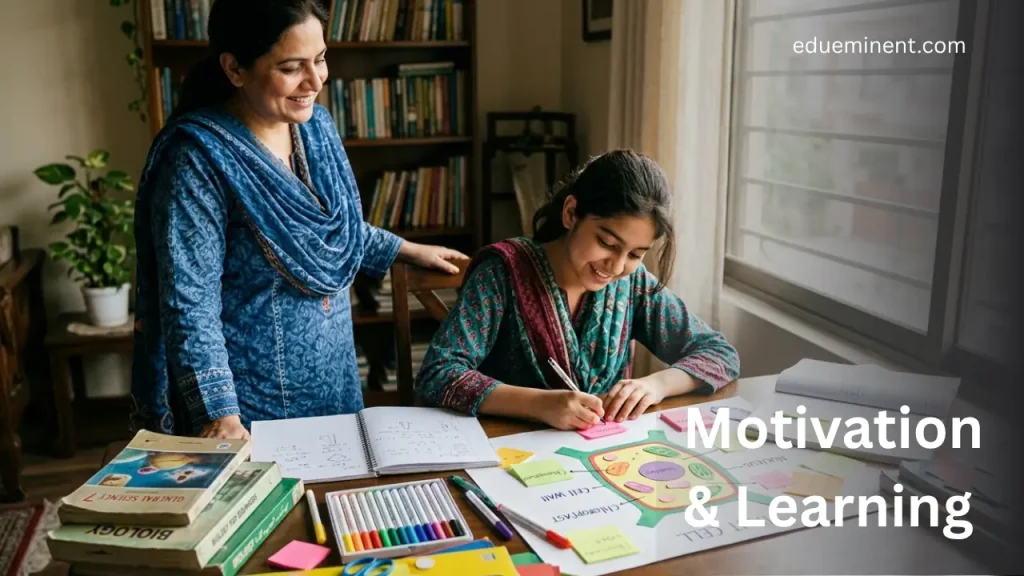
Over time, this kind of language helps a child build what psychologists sometimes call a growth mindset, the belief that ability grows through effort rather than being fixed from birth.
Children who believe their abilities can improve with practice tend to stick with hard tasks longer than children who believe ability is simply something you either have or do not.
Address the Root Cause When Motivation Drops
When a child suddenly resists a task they used to handle fine, it helps to look for a root cause instead of assuming pure laziness or defiance. A few common culprits show up again and again in homeschool families.
Basic needs. Hunger, poor sleep, or simply too much time sitting still can all look like a motivation problem on the surface.
Task difficulty mismatch. Material that is too hard causes frustration, while material that is too easy causes boredom. Both can look identical from the outside, a child who suddenly refuses to engage.
Overload. Too many subjects crammed into one day, or an unrealistic pace, can wear a child down until they simply shut off.
Format mismatch. As covered earlier, a lesson delivered in a format that does not fit how a child learns can create resistance that looks like a lack of motivation.
Working through this short list before assuming the worst often reveals a simple fix, rather than a deeper problem.
Motivating Middle Schoolers, Grades 6 to 8, Specifically
Middle school brings a real shift in how motivation works. Students at this age crave more independence, care much more about peer relationships and social identity, and start connecting schoolwork to a bigger picture, like future goals or personal interests.
Offer more independence, with support nearby. Middle schoolers benefit from managing their own daily checklist and self checking some of their own work, with a parent reviewing rather than directing every single step. Total independence too soon can backfire, but so can constant hovering.
Connect work to bigger goals. Older middle schoolers respond well to seeing how current work connects to future plans, whether that means high school credit, a specific interest, or a skill they want for a hobby or future career.
Respect their opinions. Asking a middle schooler what helped them focus today, or what got in the way, and actually listening to the answer, tends to build far more genuine buy in than simply issuing instructions.
Watch for identity based motivation. Many middle schoolers start caring deeply about how they see themselves, as a good writer, a math person, an athlete, an artist.
Connecting schoolwork to the identity a child is building for themselves, rather than treating every subject as equally important to every child, can meaningfully increase engagement in the areas that matter most to them.
Protect social time. As middle schoolers naturally crave more peer connection, make sure academic demands do not crowd out regular social opportunities, since isolation can quietly drain motivation for everything else too.
When to Worry: Motivation Problems vs Something More
Most motivation dips are completely normal and temporary, especially after a long stretch of schoolwork or during a stressful period at home. However, a few signs suggest it may be worth looking deeper, possibly with input from a pediatrician, therapist, or educational specialist.
- Motivation loss lasts for months rather than days or weeks, even after trying several different strategies.
- The resistance shows up across every subject and activity, not just school related tasks.
- You notice signs of ongoing sadness, anxiety, or a big change in sleep, appetite, or mood alongside the motivation drop.
- Your child consistently struggles to focus even during preferred, low pressure activities like a favorite hobby or game.
These signs do not automatically mean something serious is wrong, but they are worth mentioning to a professional rather than assuming more strategies from this guide will eventually fix it.
Final Thoughts
Motivation in a homeschool rarely comes from pressure or from finding the one perfect trick. It comes from steadily building a child’s sense of choice, competence, and connection to what they are learning, one small change at a time.
Some strategies in this guide will fit your child right away, and others will need adjusting or dropping altogether, and that is completely normal.
Pay attention to what actually shifts your child’s energy, keep the changes small and steady, and remember that motivation is not a fixed trait a child either has or does not have. It is something you can build together, day by day, through the choices you make about how learning happens in your home.
Start with just one or two strategies from this guide rather than trying to overhaul everything at once. A single small change, like offering a genuine choice each morning or adding one hands on activity a week, often produces more real improvement than a complete system overhaul that is hard to sustain past the first few days.
Frequently Asked Questions
Why does my child seem motivated for some subjects but not others?
This usually points to a mismatch between the subject’s format or difficulty level and how your child learns best, rather than a general lack of motivation. Try adjusting the format of the difficult subject before assuming your child simply dislikes it.
Are rewards bad for motivation?
Not necessarily, but relying only on rewards for every task can weaken internal interest over time. Pairing occasional rewards with real conversation about effort and progress works better than rewards alone.
How much choice should I actually give my child?
Even small, real choices, like which subject to start with or how to complete an assignment, can meaningfully improve motivation. You do not need to give up control of the overall curriculum to offer this kind of choice.
Is it normal for motivation to change from week to week?
Yes, motivation naturally fluctuates based on sleep, stress, interest in the current topic, and even the weather. Occasional dips are normal and do not necessarily signal a bigger problem.
Should I force my child to finish a lesson they clearly are not engaged in?
Not always. Sometimes stepping away, switching formats, or returning to the lesson later produces far better results than pushing through resistance in the moment.
How do I motivate a child who says school is boring?
Look for ways to add real world connection, choice, or hands on elements to the specific subject they find boring, rather than assuming the subject itself cannot be made interesting.
Can too much screen time affect motivation for regular schoolwork?
Yes, heavy screen use, especially fast paced games or videos, can make slower paced academic tasks feel unusually dull by comparison. Balancing screen time with other activities can help restore interest in regular lessons.
What if nothing in this guide seems to work?
Consider whether an underlying issue, like a learning difference, anxiety, or an unaddressed health need, might be contributing, and talk with a pediatrician or educational specialist if motivation problems persist for an extended period despite real effort.
Does motivation look different for boys and girls?
Individual differences within any group are usually far larger than any general pattern by gender, so it works better to focus on your specific child’s interests, energy levels, and learning style rather than broad assumptions based on gender alone.
How long should I wait before changing my approach if a strategy is not working?
Give a new strategy at least one to two weeks of consistent effort before judging it, since children often need time to adjust to a new routine or format, but do not hesitate to adjust sooner if a strategy is clearly causing more stress than progress.