This comprehensive guide to O Level Chemistry 5070 explains the Cambridge syllabus for 2026–2028, covering all 12 topics, examination structure, and assessment objectives. It explores important chemistry concepts, including stoichiometry, electrochemistry, chemical reactions, organic chemistry, and experimental techniques.
Students will also find practical study strategies, a 16-week revision plan, common examination mistakes, and answers to frequently asked questions. The guide helps students, parents, teachers, and independent learners understand the course and prepare more effectively for their examinations.
Chemistry rewards students who understand it and punishes those who only memorise it. That’s why O Level Chemistry 5070 feels easy to some learners and frustrating to others.
The subject is not especially huge, but it asks you to connect ideas across topics: a mole calculation can appear inside a question about electrolysis, and bonding explains almost everything from why diamond is hard to why alloys are stronger than pure metals.
This guide explains what Cambridge O Level Chemistry 5070 covers, how it is examined, and how to prepare effectively. You will find a topic-by-topic walkthrough of the syllabus, practical study methods, a 16-week plan, the mistakes that cost students marks, and answers to common questions.
O Level students can choose from a range of subjects depending on their academic interests and plans. Understanding compulsory and optional subjects can help students build a suitable combination for further education. Read our guide to O Level subjects in Pakistan before finalising your subject selection.
What Is O Level Chemistry 5070?
Cambridge O Level Chemistry 5070 is an internationally recognised secondary-school qualification, typically taken by learners aged 14 to 16. It was designed for an international audience, including learners whose first language may not be English. Results are reported as grades A* to E, and Cambridge describes candidates who achieve A* to C as well prepared for further study, including Cambridge International AS & A Level Chemistry.
The syllabus covered here is the one for exams in 2026, 2027 and 2028, published as version 1 in September 2023. Cambridge states that it contains no substantial changes affecting teaching, so textbooks endorsed for earlier versions remain suitable.
A separate syllabus has been published for 2029 exams, so always confirm which version applies to your exam year. Exams are offered in the June and November series, although availability depends on your administrative zone.
Whether you’re in an international school in the UAE, studying at a Cambridge curriculum school, or preparing independently, this guide equips you with everything needed to understand the syllabus, ace your papers, and build a genuine passion for chemistry.
A Syllabus, Not a Single Book
One point is worth making early: 5070 is a syllabus code, not a textbook title. No single book defines the course. The official syllabus is the final authority on what can be asked, and schools choose their own teaching resources.
This means your most important study document is the syllabus itself. Think of any textbook, set of notes, or video course as a way of covering that list of learning objectives. If a resource spends pages on something the syllabus does not mention, you can safely treat it as extra.
Who This Guide Is For
Students will find a clear route through the content and the exam. Parents can use it to understand what their child is studying and how to support revision without needing a chemistry background. Teachers and independent learners, including private candidates, can use the topic summaries and the study plan as a planning framework.
How the O Level Chemistry 5070 Exam Works
Every candidate takes three papers: two written papers and one practical-based paper chosen from two options.
| Paper | Format | Duration | Marks | Weighting |
| Paper 1 | Multiple choice (40 four-option questions) | 1 hour | 40 | 30% |
| Paper 2 | Theory (short-answer and structured questions) | 1 hour 45 minutes | 80 | 50% |
| Paper 3 or Paper 4 | Practical Test or Alternative to Practical | 1 hour 30 minutes or 1 hour | 40 | 20% |
Paper 3 involves doing experiments in a laboratory. Paper 4 does not, but it tests the same experimental skills and the same contexts, using written questions about experiments. Your school decides which option you sit.
The papers test three assessment objectives. Knowledge with understanding (AO1) carries about 50% of the qualification, handling information and problem-solving (AO2) about 30%, and experimental skills and investigations (AO3) about 20%.
In practice, this means roughly a third of the written marks reward applying chemistry to unfamiliar situations, not repeating textbook sentences. Calculators are permitted in all parts of the examination.
Understanding examination grades is essential for students preparing for Cambridge qualifications. The grading system helps students interpret their academic performance and understand how examination results are reported. Read our guide to the O and A Level grading system to learn more about grades and their meaning.
O Level Chemistry 5070 Syllabus Topics Explained
The syllabus contains 12 topics. Below, each one is explained in plain language, with the ideas that matter most for exam questions.
1. States of Matter
This topic uses kinetic particle theory to explain solids, liquids and gases: how far apart the particles are, how they are arranged, and how they move. You then use the same idea to explain melting, boiling, evaporating, freezing and condensing, and to interpret heating and cooling curves. The flat sections of a curve are where a change of state is happening.
The topic also covers how temperature and pressure affect the volume of a gas, and diffusion. A classic example is ammonia and hydrogen chloride gas diffusing along a tube: the white ring forms closer to the hydrogen chloride end because its molecules are heavier and move more slowly.
2. Atoms, Elements and Compounds
Here you build the foundation for the rest of the course. You learn the structure of the atom, define proton number and mass number, write electronic configurations for elements 1 to 20 (for example 2,8,3 for aluminium), and work with isotopes, including calculating relative atomic mass from isotope abundances.
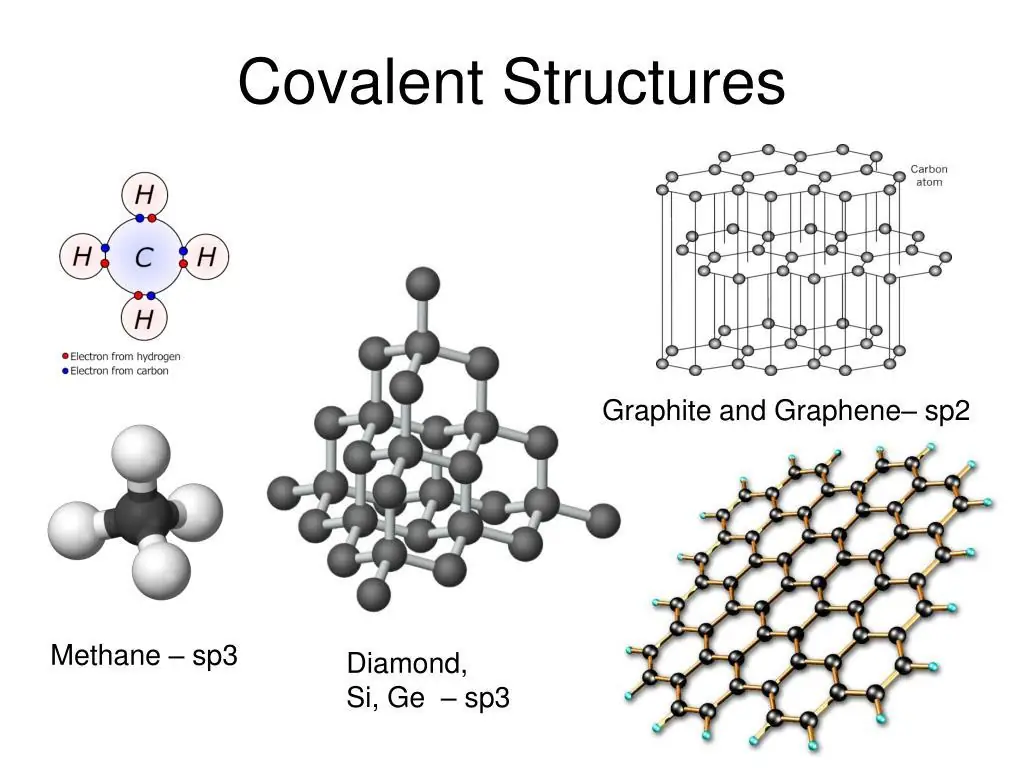
The second half is bonding: ionic bonds with giant lattices, covalent bonds in simple molecules, giant covalent structures (diamond, graphite and silicon(IV) oxide), and metallic bonding. The skill examiners look for is linking structure to properties. Why does graphite conduct electricity while diamond does not? Because graphite has delocalised electrons between its layers.
3. Stoichiometry
Stoichiometry is the calculation backbone of the subject. It begins with writing formulae and balanced word, symbol and ionic equations with state symbols, then moves to relative atomic and molecular masses, the mole and the Avogadro constant (6.02 × 10²³).
The central relationship is amount in moles = mass ÷ molar mass. You also use the molar gas volume of 24 dm³ at room temperature and pressure, concentration in g/dm³ and mol/dm³, limiting reactants, titration calculations, empirical and molecular formulae, and percentage yield, composition and purity. For example, 12 g of magnesium is 0.5 mol, and reacting it with excess hydrochloric acid produces 0.5 mol of hydrogen, which is 12 dm³ at r.t.p.
4. Electrochemistry
Electrolysis is defined as the decomposition of a molten or dissolved ionic compound by an electric current. You need to identify the anode (positive) and cathode (negative), describe how charge moves through the circuit and electrolyte, and predict the products for molten lead(II) bromide, concentrated aqueous sodium chloride, dilute sulfuric acid and copper(II) sulfate.
The copper(II) sulfate case is a favourite because the electrodes matter. With carbon electrodes you get copper and oxygen; with copper electrodes the anode dissolves, the cathode grows, and the blue colour stays. The topic also covers ionic half-equations, electroplating and hydrogen–oxygen fuel cells compared with petrol engines.
5. Chemical Energetics
This topic is about energy changes in reactions. Exothermic reactions release thermal energy and have a negative ΔH; endothermic reactions absorb it and have a positive ΔH. You must define activation energy and draw and interpret reaction pathway diagrams with labelled reactants, products, ΔH, and Ea.
The calculation part uses bond energies. Breaking bonds takes in energy and making bonds releases it, so the enthalpy change is the energy needed to break the bonds in the reactants minus the energy released by making the bonds in the products.
6. Chemical Reactions
This is one of the largest topics, and it has four parts. Rate of reaction uses collision theory to explain the effects of concentration, pressure, surface area, temperature, and catalysts, including enzymes, and asks you to interpret rate graphs and practical methods. Reversible reactions and equilibrium cover how changing conditions shift the position of equilibrium.
Industrial processes belong here too. The Haber process (about 450 °C, 200 atm, iron catalyst) and the Contact process (about 450 °C, 2 atm, vanadium(V) oxide catalyst) must be explained as compromises between rate, yield, safety and cost. Finally, redox covers oxidation and reduction in terms of oxygen, electrons and oxidation numbers, plus oxidising and reducing agents.
7. Acids, Bases and Salts
Acids are proton donors and bases are proton acceptors. You describe reactions of acids with metals, bases and carbonates, the ionic equation for neutralisation, and the difference between strong acids (fully dissociated) and weak acids (partially dissociated). Indicators such as litmus, thymolphthalein and methyl orange, and universal indicator paper are part of the topic.
You also classify oxides as acidic, basic or amphoteric (limited to aluminium oxide and zinc oxide). Salt preparation is highly practical: soluble salts by titration or with an excess of metal, base or carbonate, and insoluble salts by precipitation, guided by the solubility rules.
8. The Periodic Table
The Periodic Table is treated as a tool for prediction. You explain why elements in a group behave similarly in terms of outer electrons, and how metallic character changes across a period.
Group I (lithium, sodium, potassium) shows decreasing melting point and increasing reactivity down the group. Group VII (chlorine, bromine, iodine) shows increasing density and decreasing reactivity, and halogen displacement reactions are a common exam context. Transition elements are described by their high density, high melting points, variable oxidation numbers, coloured compounds and catalytic behaviour, and the noble gases are explained by their full outer shells.
9. Metals
This topic links properties to uses: aluminium for aircraft and cables because of low density, copper for wiring because of conductivity and ductility. Alloys such as brass and stainless steel are explained by structure, since atoms of different sizes stop layers from sliding easily.
The reactivity series is the key reference, used to explain reactions with water, steam and dilute acid, displacement reactions and the ease of extracting a metal from its ore. You also cover rusting and its prevention (barrier methods, sacrificial protection and galvanising), the blast furnace for iron, and the electrolytic extraction of aluminium using cryolite.
10. Chemistry of the Environment
This topic applies chemistry to everyday issues. For water, you cover tests for water and purity, harmful and beneficial substances in natural water, and the stages of domestic water treatment: sedimentation, filtration, carbon and chlorination. NPK fertilisers supply nitrogen, phosphorus and potassium.
Air quality and climate form the biggest section. You link each pollutant (carbon monoxide, oxides of nitrogen, sulfur dioxide, methane, carbon dioxide, particulates) to its source and effects, explain how greenhouse gases cause global warming, and describe strategies such as catalytic converters and flue gas desulfurisation. Photosynthesis, with its word and symbol equations, completes the topic.
11. Organic Chemistry
Organic chemistry organises carbon compounds into homologous series with the same functional group and general formula: alkanes, alkenes, alcohols and carboxylic acids. You learn to name and draw compounds with up to four carbon atoms, and to recognise structural isomers such as butane and methylpropane.
The topic runs through fuels and fractional distillation of petroleum, alkane substitution with chlorine, alkene cracking and addition reactions, the bromine test for unsaturation, two methods of making ethanol (fermentation and steam addition) and their trade-offs, carboxylic acid reactions and esters. It ends with polymers: addition and condensation polymerisation, nylon, PET, proteins, and the environmental problems of plastic disposal.
12. Experimental Techniques and Chemical Analysis
This topic is the bridge to the practical paper. You must know which apparatus measures time, temperature, mass, and volume, how an acid–base titration is carried out, how paper chromatography works, and how to calculate an Rf value (distance moved by the substance divided by distance moved by the solvent).

Separation and purification methods include filtration, crystallisation, simple distillation and fractional distillation. The analysis section covers tests for anions, cations (using sodium hydroxide and aqueous ammonia), gases and flame colours. These tests are heavily examined in both written and practical papers, so learn the observations precisely.
How to Use the Syllabus and Your Study Materials
Whatever resources you use, the same habits make them work harder. These are general study recommendations rather than official requirements.
Preparing a Study Schedule
Cambridge designs O Level syllabuses around roughly 130 guided learning hours, which gives a useful sense of scale. Work backwards from your exam date and give each topic a block of time, with larger topics such as Chemical Reactions and Organic Chemistry getting more.
Short, frequent sessions beat occasional marathons. Four sessions of 45 minutes across a week will usually do more than one three-hour session on Sunday.
Understanding Difficult Concepts
Moles, equilibrium and redox trouble most students. When a concept will not click, return to the smallest possible example and work through it by hand before attempting exam-style questions.
Explain the idea aloud as if teaching a younger sibling. If you cannot explain why increasing pressure favours the side of the Haber equation with fewer gas molecules, you have found exactly where to focus.
Making Effective Notes
Use the syllabus objectives as headings, then write each answer in your own words. Make separate one-page summaries for the items that need exact recall: the reactivity series, ion tests, industrial conditions and organic reactions.
A two-column table works well for tests, with the reagent and the result side by side. Colours and precipitates should be recorded exactly, because “white precipitate” and “cream precipitate” are different answers.
Practising Exercises and Past Paper Questions
Practice should rise in difficulty. Start with topic questions straight after finishing each topic, then mix topics, then move to full timed papers.
After marking, write down why each mark was lost: knowledge gap, misread command word, or calculation slip. Pay attention to command words such as state, describe, explain, and suggest, because each asks for a different depth of answer.
Revising Important Topics
Spaced revision works better than a single final push. Revisit each topic after a few days, then after a couple of weeks, using flashcards or blank-page recall instead of rereading.
Give extra rounds to topics that connect to many others: bonding, the mole, rates and equilibrium, and electrolysis.
Tracking Learning Progress
Create a checklist from the 12 topics and their subtopics, and rate your confidence on each from 1 to 5. Re-score every two weeks and let the lowest scores decide your next study sessions.
Keep a record of past-paper scores as well, noting separate results for multiple-choice, theory, and practical-style questions. A trend over several weeks says more than any single paper.

A 16-Week O Level Chemistry 5070 Study Plan
This plan suits a student starting from the beginning with about four to six hours a week. It is a suggestion, not an official timetable, so compress or stretch it to fit your exam date.
Weeks 1–4: Build the Foundations
Study States of Matter, Atoms, Elements and Compounds, and the first half of Stoichiometry. Prioritise electronic configuration, the three types of bonding and the mole formula, since later topics lean on them.
Complete short questions after each topic and practise writing balanced equations daily. Check your progress by explaining, without notes, how structure and bonding account for the properties of an ionic compound, a simple molecule, diamond and a metal.
Weeks 5–8: Reactions and Energy
Finish Stoichiometry, then study Electrochemistry, Chemical Energetics and Chemical Reactions. Prioritise titration calculations, electrolysis products, reaction pathway diagrams and collision theory.
Do a simple rate experiment if you can, or study the method carefully if you cannot. Test yourself with a mixed set of ten calculation questions, aiming to show full working every time.
Weeks 9–12: Chemistry of the Elements and Carbon
Cover Acids, Bases and Salts, the Periodic Table, Metals and Organic Chemistry. Prioritise salt preparation methods, group trends, the reactivity series and the reactions of alkenes, alcohols and carboxylic acids.
Build one-page summary sheets and practise naming and drawing organic compounds. Evaluate your progress with a multiple-choice paper on these topics, then review every wrong answer, not just the score.
Weeks 13–16: Environment, Practical Skills and Exam Practice
Study Chemistry of the Environment and Experimental Techniques and Chemical Analysis, then spend the remaining time on full past papers under timed conditions. Prioritise ion and gas tests, chromatography, apparatus choice and graph-drawing, whichever practical paper you will sit.
Sit at least one complete set of Papers 1 and 2 and one practical-style paper under exam conditions. Compare your marks against your topic checklist and spend the final week on your weakest areas and your summary sheets.
Common Mistakes in O Level Chemistry 5070
1. Treating Chemistry as Memorisation
Students often learn facts without understanding why. It happens because facts feel safer to revise. Ask “why” after every fact, such as why a catalyst speeds up a reaction, and practise explanations in full sentences.
2. Skipping Balanced Equations
Students lose many marks for unbalanced equations or missing state symbols. This usually comes from rushing. Check atoms on both sides every time, and make equation-writing a daily five-minute habit.
3. Weak Mole Calculations
Students jump straight to a formula without working out which quantity they actually have. It happens because the mole is abstract. Write the chain of steps explicitly, from mass to moles, to the ratio in the equation, to the quantity asked for, and always include units.
4. Mixing Up Observations and Conclusions
In tests, students write “it is a carbonate” when the question asks what is seen. This happens when learners remember the conclusion but not the evidence. State the observation first, such as “effervescence; limewater turns milky”, and only then name the ion or gas.
5. Ignoring the Command Word
“State” needs a short fact, while “explain” needs reasoning. Learners often give the same length of answer for both. Underline the command word and match your answer to the marks available.
6. Leaving Practical Skills Until the Last Minute
Because practical work is separate from theory, it gets postponed. Yet it is 20% of the qualification. Practise variables, apparatus, tables, graphs, and error evaluation throughout the course, not only at the end.
7. Using Past Papers Too Late
Some students save past papers until the final weeks and then discover large gaps. Start with topic-level questions early, and keep full papers for the last phase so that each one reflects your current ability.
Conclusion
O Level Chemistry 5070 is a well-structured qualification built around 12 clearly defined topics, three papers and one consistent message: understand the ideas, then apply them. The syllabus itself is your best guide, and a steady plan of topic study, targeted practice, and timed papers will serve you better than last-minute cramming.
Students preparing for their exams, parents supporting them, teachers planning courses, and private candidates studying alone can all benefit from the approach above. Start today by printing the topic list, rating your confidence on each item, and booking your first four study sessions for this week.
Frequently Asked Questions
Is O Level Chemistry 5070 hard?
It is demanding but manageable. Most difficulty comes from calculations, equilibrium, and remembering many precise tests and reactions. Students who practise regularly and learn to explain concepts usually find it far more approachable.
How many topics are in the O Level Chemistry 5070 syllabus?
There are 12 topics, running from States of Matter to Experimental Techniques and Chemical Analysis. Each topic is divided into numbered subtopics with specific learning objectives.
What is the difference between Paper 3 and Paper 4?
Paper 3 is a laboratory Practical Test lasting 1 hour 30 minutes, while Paper 4 is a written Alternative to Practical lasting 1 hour. Both carry 40 marks and 20% of the qualification, and both test the same experimental skills.
How is the final grade calculated?
Paper 1 contributes 30%, Paper 2 contributes 50%, and the practical paper contributes 20%. Cambridge sets grade thresholds for each exam series, so the marks needed for a given grade can change between sessions.
How long does it take to prepare for O Level Chemistry 5070?
Cambridge designs the course for about 130 guided learning hours, though this varies with prior knowledge. A focused 16-week plan, as outlined above, is a realistic route for a learner who studies a few hours each week.
Do I need a textbook to study O Level Chemistry 5070?
Not necessarily one specific book, but you do need a reliable resource that matches the syllabus. Check that it covers all 12 topics and use the official syllabus as your checklist.
Can I use a calculator in the exam?
Yes. The syllabus states that calculators may be used in all parts of the examination. Practise with the calculator you will use, and show your working in case of errors.
Is O Level Chemistry 5070 the same as IGCSE Chemistry?
Cambridge places O Level and IGCSE syllabuses at the same level. They are separate qualifications, though, and a candidate cannot take both Cambridge O Level Chemistry and Cambridge IGCSE Chemistry in the same exam series.
Which grades prepare me for A Level Chemistry?
Cambridge states that candidates who achieve grades A* to C are well prepared for further study, including AS & A Level Chemistry. Individual schools and colleges may set their own entry requirements, so ask them directly.
When can I take the exam, and can private candidates enter?
Exams are available in the June and November series, and private candidates can enter. Your exams officer or examination centre can confirm timetables, registration deadlines, and which practical option is available to you.