
Online tutoring jobs in Pakistan offer students, graduates, teachers, and homemakers a flexible way to earn from home. This guide explains tutoring opportunities, platforms, qualifications, earnings, equipment, international payments, finding your first students, common mistakes, and scams to avoid when starting online teaching.
Not long ago, teaching meant a school staff room or a long, tiring ride across the city to a student’s house. That has changed.
Today, online tutoring jobs in Pakistan let a graduate in Multan teach a Class 9 student in Lahore, an A Level candidate in Dubai, or an IELTS hopeful in Manchester, all from a quiet corner at home.
Online tutoring simply means teaching a student live over the internet, usually one-to-one, using video and a shared whiteboard.
This guide covers who is hiring, what you can realistically earn, which platforms are worth a look, how payments work, and which scams to avoid. It is written for students, fresh graduates, teachers,s and homemakers who want to earn from teaching without a daily commute.
What Are Online Tutoring Jobs in Pakistan?
Online tutoring jobs in Pakistan are paid teaching roles where you deliver lessons over the internet instead of face-to-face.
You use video calls, screen sharing, and a digital whiteboard, and your student could be on the next street or on another continent.
There are two main ways to work. The first is through a platform or tuition agency, which finds students, checks your profile, and often manages the first payment.
The second is private tutoring, where you find students yourself through your network, social media, or a freelance marketplace and keep everything you charge.
Platforms save you the hunt for clients, but they usually take a cut or charge a registration fee. Going solo pays better per hour once you’re established, though the first months can be slow. Most tutors who last end up doing a bit of both.
Picture a typical evening for a working tutor: two school-level maths classes once the students are home, a half-hour doubt-clearing call, and a little preparation for tomorrow.
Others teach a few hours on weekends around university or a day job. The hours bend around your life, and that flexibility is the main attraction.
Types of Online Tutoring Jobs
Not every tutoring job looks the same. Demand clusters around a handful of areas, and choosing the right one matters more than most beginners realise.
School Subjects: Matric, O Levels and A Levels
This is the biggest pool of work. Parents want help with maths, physics, chemistry, biology, computer science and accounting, whether their child follows a provincial board, the Federal Board, Cambridge O Level or Edexcel.
If you did well in these subjects and can explain them without just reading from a textbook, you’re already employable.
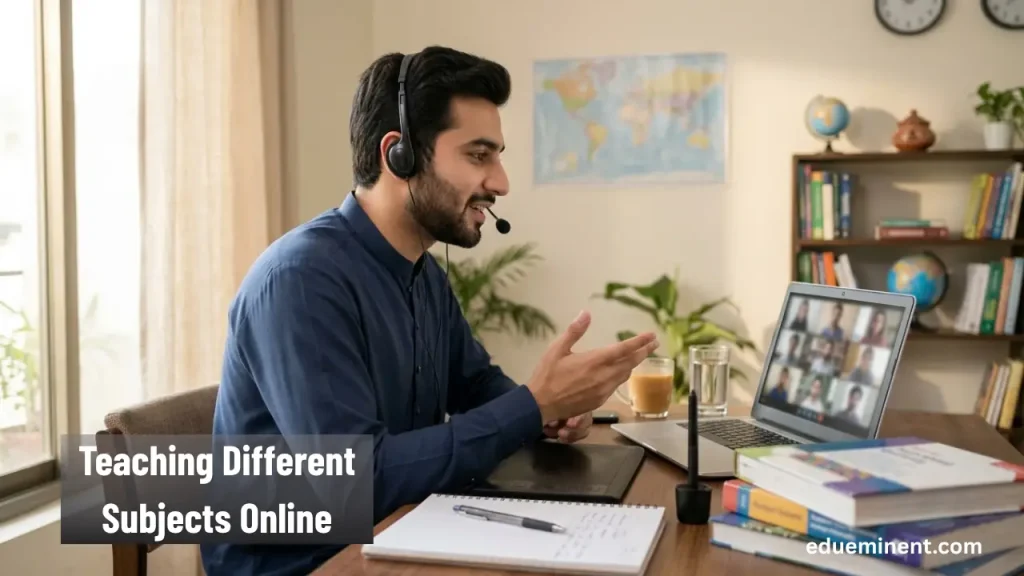
English and IELTS
Spoken English, writing support, and IELTS preparation are requested all the time, both by Pakistani students heading abroad and by overseas learners looking for an affordable tutor.
Clear pronunciation helps, but a perfect accent isn’t required. Patience and a good structure matter far more.
Coding and IT
Python, web development, spreadsheets, and basic digital skills sell well to teenagers and working adults. Tutors with real project experience can charge more than general subject tutors, simply because few people can teach this properly.
Test Prep: MDCAT, ECAT, SAT and Entry Tests
Entry-test preparation is seasonal but rewarding. Students pay for results, so tutors with a strong score of their own, or a record of students who passed, find clients quickly in the months before the exams.
University-Level Tutoring
Undergraduates look for help with calculus, statistics, programming, economics, and engineering courses. Sessions are shorter and more specific, and the questions can be tough.
One rule worth setting early: you teach the student how to solve the prob; em, you don’t write their assignment for them.
Which one should you pick? Choose the area where your own results are strongest and where you can explain things plainly. A tutor who loves physics but finds English dull will teach physics better, and students can tell the difference within five minutes.
How Much Do Online Tutors Earn in Pakistan?
The honest answer is that online tutor salary in Pakistan varies a lot, and anyone quoting one neat number is guessing. Your earnings depend on four things: your subject, your experience, the level you teach,h and where your students live.
For a rough reference point, one Karachi academy recently advertised a full-time, salaried online tutor role at 25,000 to 60,000 rupees a month. That is a single listing, not an industry average, and freelance rates can sit above or below it.
- Subject: Specialised areas such as coding, A Level sciences, and entry-test prep tend to pay more than general primary tuition.
- Experience: A tutor with reviews, results, and repeat students can charge more than a newcomer with a blank profile.
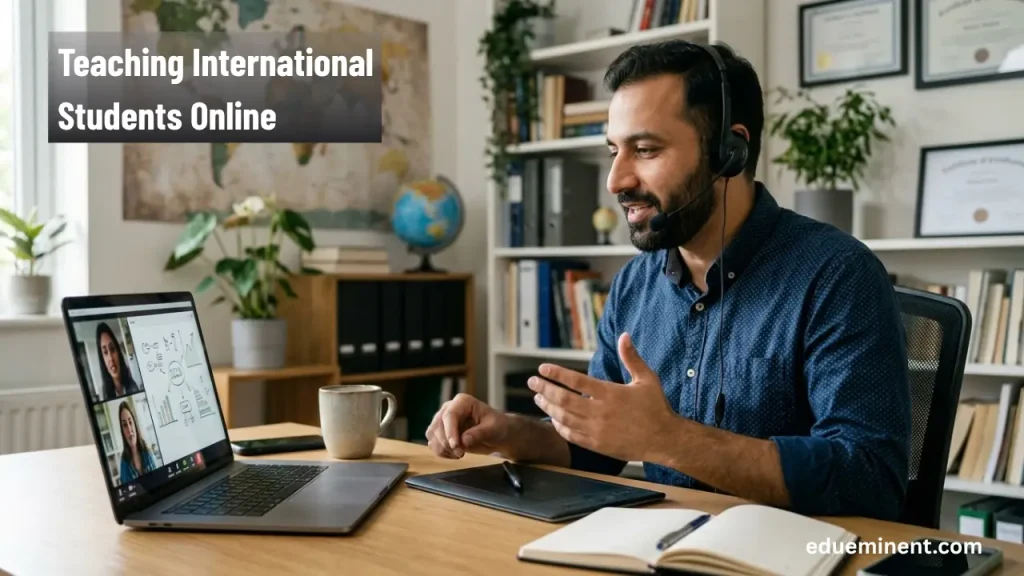
- Student location: Families in the UK, the Gulf, or North America often pay in stronger currencies than local clients, though they also expect more polish and trickier scheduling.
- Platform model: Agencies may keep part of the first month’s fee, while marketplaces take a percentage of each payment. Check the deduction before you accept a student.
A practical way to price yourself: decide your target monthly income, divide it by the hours you can realistically teach each week, and add a buffer for cancellations. They will happen.
Rates rise with proof. Keep a simple record of student results, such as improved marks or passed exams, and use it when you increase your price.
Existing students usually accept a modest rise if you give notice and the lessons keep delivering. New students will simply pay the new rate without ever knowing the old one.
Best Online Tutoring Platforms for Pakistani Tutors
There is no single best option, because every platform recruits differently and suits different tutors. The five below are names Pakistani tutors come across often when searching for online tutoring platforms Pakistan offers.
Terms and fees change, so confirm current details on each platform’s own site before registering.
| Platform | Focus | How tutors join | Worth knowing |
| foriEDU | Home and online tuition across Pakistan | Sign up, build a profile, identity and qualification check | Public information points to free tutor registration |
| eTutors Academy | Islamabad-based tutor search portal | Profile listing, matched to student requirements | Wide range of categories, including exam coaching |
| TutorBees | Online-first tuition platform | Verified profile; students contact you inside the platform | You agree your fee directly with the student |
| Keep Tutors | Karachi-based academy, online and home | App or web portal with CNIC, photo and CV, then screening | Free demo class arranged before the tuition starts |
| Apna Tuition | Tuition-matching service | Create a profile and list your subjects and levels | Ask about fees, commission,n and payout timing first |
foriEDU
foriEDU offers both home and online tutoring, and it has been in the market for several years, including live crash courses for students.
Tutors sign up, build a profile with their subjects and teaching preferences, and go through identity and qualification checks. It suits you if you’d like a mix of online and in-person work.
eTutors Academy
eTutors Academy presents itself as an online tutor search portal that pairs students with tutors using a matching algorithm. Its categories run from school and college tuition to vocational training and entrance-exam coaching.
That breadth makes it a sensible pick if you teach something slightly outside the usual maths-and-English crowd.
TutorBees
TutorBees is built around online lessons. Students post what they want to learn, tutors respond inside the platform, and both sides settle on a fee.
The platform stresses verified profiles and secure payments. Because you negotiate your own rate, it rewards tutors with a strong profile and a clear price in mind.
Keep Tutors
Keep Tutors is a Karachi-based academy offering home and online tutoring. Tutors register through an app or web portal and submit qualifications, experience, CNIC, a photo, and a CV.
The team screens each profile, and a free demo class is arranged before a parent commits. Tutor reviews on public sites often mention the onboarding and support, so read a few for yourself.
Apna Tuition
Apna Tuition works in the same matching space as the others. As with any agency, ask three things before you register. Is there a registration fee?
What share of the first month’s fee do they keep? How and when do you get paid? If the answers come back vague, treat that as useful information.
Freelance Marketplaces and Self-Marketing
Beyond dedicated platforms, freelance marketplaces such as Fiverr and Upwork let you list tutoring services for international clients.
Local students often come through WhatsApp groups, Facebook communities,ies and LinkedIn. Self-marketing takes longer to build, but the income and the student relationships are entirely yours.
How to Choose the Right Platform
With five names on the table, how do you choose? Start with how you want to work, then check the details that affect your take-home money.
- Fees and commission: Ask whether there is a registration fee, and what share of the first month’s fee the agency keeps.
- Payout timing: Find out when you are paid, and whether payment waits for the parent to confirm.
- Verification: A platform that checks tutors properly protects you as much as it protects parents.
- Student type: Some platforms suit local school students, others attract international learners. Match the platform to your subject.
- Support: Does anyone answer when a parent disputes a class? Ask before you register, not after.
Here is a simple test. Message the support team with a practical question before you sign up. How quickly and clearly they reply tells you a lot about how they’ll treat you later.
What Qualifications Do You Need to Teach Online?
Pakistan doesn’t have one universal licence for private online tutors, so the real requirements come from platforms and parents. Here is what usually counts.
- Education: Many agencies prefer at least an intermediate pass for school-level teaching, and a bachelor’s degree (finished or ongoing) for higher levels.
- Subject mastery: You need to know your topic well enough to explain it three different ways when the first explanation fails.
- English fluency: Essential for international students and exam prep. For local students, being comfortable with Urdu and English together is often enough.
- ID and verification: Expect to provide a CNIC copy, a photo, and academic documents. Genuine platforms verify tutors before matching them.
- Basic tech skills: You should handle video calls, screen sharing,g and a digital whiteboard without fuss.
So, can you start without a degree? Sometimes. It’s easier as a private tutor or at the school level, but you’ll see fewer platform options.
If you lack formal credentials, build proof another way: strong exam results, a recorded demo lesson on your profile, and a few written testimonials from people you’ve helped informally. Proof of ability often does the work a certificate would.
How to Become an Online Tutor in Pakistan: 7 Steps
If you’re wondering how to become an online tutor in Pakistan, follow these seven steps in order. None of them is complicated, but skipping one usually shows up later as a lost student.
- Pick your subject and level. Choose one or two subjects you know cold, and decide who you want to teach: Matric students, O Level candidates, university learners, or adult English speakers. A narrow focus gets you hired faster than a list of ten subjects.
- Gather your documents. Most platforms ask for your CNIC, academic certificates, a short CV, V and a clear photo. Scan everything neatly now so you’re not scrambling when a good opportunity appears.
- Record a short intro video. Keep it to 60 to 90 seconds. Say who you are, what you teach, and how you explain difficult ideas. Good light, a quiet room, om and a calm voice matter more than fancy editing.
- Set up your space and tools. Sort out your laptop, headset, internet, and a backup for power cuts. Test your video platform and whiteboard with a friend before any paying student sees them.
- Register on one or two platforms. Don’t sign up everywhere at once. Pick a couple of platforms, complete your profile properly, and see how fast they respond. Quality profiles beat quantity.
- Prepare a demo lesson. Most students and parents ask for a trial class. Plan twenty minutes on one topic, include a small question for the student, and finish with a clear next step.
- Set your rate and your rules. Decide your hourly or monthly fee, your cancellation policy, and your weekly availability. Write them down and share them before the first lesson, so awkward conversations never happen later.
What Equipment Do You Need to Teach Online?
You don’t need a studio. You do need a setup that doesn’t fail halfway through a lesson, and in Pakistan that means planning for power and internet cuts.
- Laptop or desktop: Reliable, with a working camera and enough battery to survive a short outage.
- Headset with a microphone: Clear audio is the single biggest quality upgrade you can make.
- Stable internet plus a backup: Keep a mobile data package or hotspot ready for when the main connection drops.
- Power backup: A UPS for your router and laptop can save a lesson and your reputation.
- Teaching tools: Zoom or Google Meet for calls, plus a whiteboard app, or a tablet with a stylus for handwritten work.
- A quiet, well-lit spot: Face a window or a lamp, and keep the background plain.
Tell students about your backup plan upfront. If the connection fails, you’ll continue by phone or reschedule without drama.
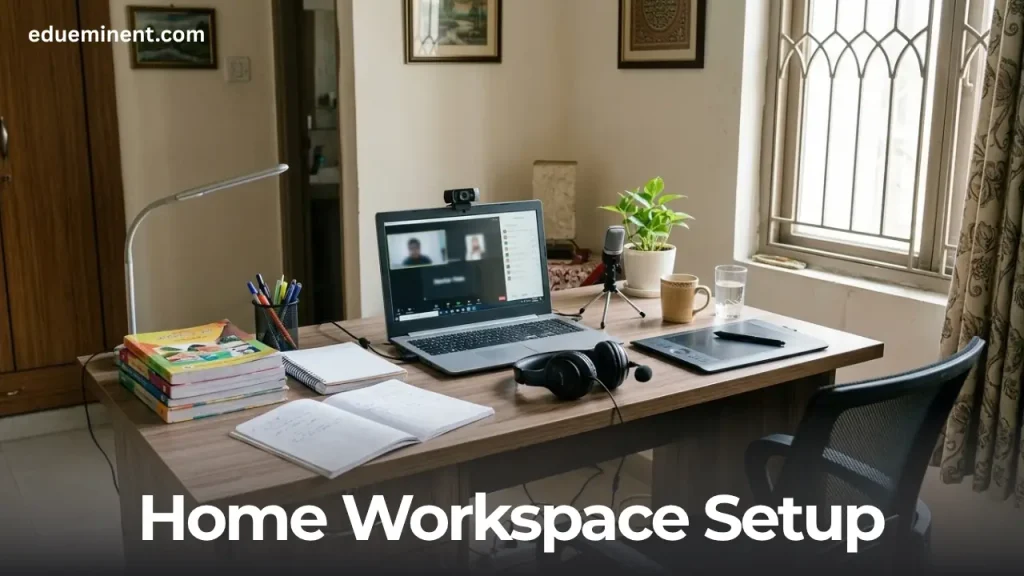
Do a ten-minute test lesson with a friend before your first paying class. Check the audio, the lighting, how your whiteboard looks on the other side, and what happens when you switch to mobile data.
Problems found with a friend cost nothing, while problems found with a parent watching can cost you a student.
How Do Time Zones Work for UK, US and Gulf Students?
Pakistan Standard Time is five hours ahead of UTC, so international lessons often land at awkward hours. UK students are usually four or five hours behind you, depending on daylight saving, which puts their after-school lessons in your evening.
US students sit nine or ten hours behind, so you’ll be teaching late at night or very early in the morning. Gulf families are closer: the UAE is one hour behind Pakistan, and Saudi Arabia is two.
Before you promise a slot, convert the time in both directions and write it in both time zones in your message. Daylight saving changes in spring and autumn trip up even experienced tutors, so recheck your schedule whenever clocks shift in your student’s country.
Be honest about your own limits too. Teaching at 2 a.m. for a month sounds exciting and feels awful by week three. Choose students whose hours you can actually sustain.
How Do Pakistani Tutors Get Paid?
How you’re paid depends on who you teach. Local clients commonly pay through bank transfer or mobile wallets such as JazzCash and Easypaisa.
International clients usually pay through a platform payout or a service such as Payoneer. Check current availability and fees before you promise anything to a client.
Many agencies collect the first month’s fee from the parent and pass your share on afterwards, so always ask about timing. If you freelance, set clear payment terms: monthly in advance is the easiest to manage and the hardest for anyone to dispute.
Tutoring income is still income. Rules about freelance earnings and money received from abroad have shifted over the years, so talk to a qualified tax advisor and keep records of everything: invoices, screenshots, transfer slips. Keeping a separate account for tutoring money makes year-end much simpler.
Whatever method you use, never begin lessons without agreeing how and when you’ll be paid. If a client resists a simple payment schedule before the first class, treat that as an early sign of trouble.
How Do You Get Your First Students?
The first student is always the hardest, and the fix is a stronger profile, not more applications.
Use a clear photo, a short bio that names your subject and level, and an intro video that sounds like you, not like a template.
- Offer a trial lesson: A free or low-cost demo lets parents judge your teaching without risk.
- Price sensibly: Not the cheapest, not the dearest. Slightly below experienced tutors is a fair opening position.
- Collect reviews early: Ask each happy parent or student for a short written review after the first month.
- Use your own network: Tell relatives, classmates and former teachers what you teach. Many early students arrive through word of mouth.
- Show up where students are: Join subject-specific WhatsApp groups and Facebook communities, and answer questions helpfully instead of posting adverts.
Once you have two or three regular students, referrals begin to take over. Protect those relationships by being on time and by sending a short progress note after each week.
Be patient through the first month. Many tutors give up after a handful of applications, yet agencies and parents often respond slowly at the start.
Keep improving your profile every week: sharpen your intro, add a subject, update your availability. A profile that looks active and complete tends to look more trustworthy.
Common Mistakes New Online Tutors Make
Most early problems come from habits rather than ability, and every one of them is fixable.
- Taking every student: An overloaded week leads to rushed lessons and poor reviews.
- Skipping lesson prep: Winging it works once. Students notice by the second time.
- Unclear cancellation rules: Without a stated policy, you end up working for free.
- Underpricing for too long: Starting low is fine. Staying low drains you and can signal low quality.
- Ignoring parents: For school students, parents decide whether you stay. A short weekly update keeps them on your side.
- Teaching only for the exam: Shortcuts help on the day, but understanding is what students remember.
Online Tutoring Scams to Avoid
Online teaching jobs in Pakistan attract scammers for the same reason they attract honest tutors: lots of people want the work. Learn the warning signs before you pay anyone or share a document.
- Big upfront fees with guaranteed students: No one can guarantee students. Some genuine agencies charge a modest registration fee, but they explain it in writing and state their refund terms. Anything vague or pushy is a red flag.
- Offers from unknown WhatsApp numbers: Especially if they ask you to buy training kits, software, or a “verification package”.
- Early requests for sensitive documents: Don’t send your CNIC or bank details before you’ve confirmed the company is real.
- Endless free trials: One demo is normal. Several unpaid “test weeks” are not.
- Payments outside the platform: Be wary of students who push you to move off the platform, or who send an overpayment and ask for a refund.
- No traceable identity: No company name, no office address, no reviews anywhere independent.
Read independent reviews, ask for written terms, and never pay a person you can’t verify. If something feels rushed, it probably is.
If you’ve already shared documents or money with someone suspicious, stop all contact, keep every message and screenshot, and report it to your bank and the relevant cybercrime authorities in Pakistan. Acting quickly limits the damage.
Pros and Cons of Online Tutoring in Pakistan
| Pros | Cons |
| Flexible hours you control | Income can be uneven at the start |
| No commute and low startup cost | Power and internet outages disrupt lessons |
| Access to students across cities and countries | Time zones can push lessons into late evenings |
| Income grows as your reviews grow | Last-minute cancellations are common |
| Works around study or family routines | Scams and unreliable agencies exist |
Weigh these honestly. The cons are manageable with a backup plan, clear policies, and a bit of patience, while the pros build on each other the longer you stay.
Final Thoughts
Online tutoring jobs in Pakistan reward people who are reliable, clear, and patient, far more than people with the fanciest degree. Start with one subject, build a profile that sounds like you, and treat your first three students like gold.
Ready for the practical walkthrough? Read our step-by-step guide on how to become an online tutor in Pakistan, and set up your profile today.
Frequently Asked Questions
Can I become an online tutor in Pakistan without a degree?
Sometimes, yes. Private tutoring and school-level subjects are open to strong students and school leavers who can show good results.
Most platforms and agencies prefer a degree, or one in progress, so your options narrow without it. A sharp intro video and a good demo lesson can make up a lot of ground.
Which platform is best for online tutoring in Pakistan?
It depends on what you teach and where your students are. ForiEDU, eTutors Academy, TutorBees, Keep Tutors, and Apna Tuition all suit different kinds of tutors.
Register with one or two, see how quickly each matches you, and check fees, commissions, and payout timing before you settle.
How much can a beginner tutor earn?
There is no fixed figure. Beginners usually start lower than established tutors because they have no reviews yet.
Work out your monthly target, divide it by the hours you can really teach, and start there. Raise your rate as your results and reviews build up.
Can females do online tutoring from home?
Yes. Online tutoring suits women who want flexible work from home, and some agencies take tutor gender preference into account when matching students.
Keep communication and payments inside the platform where possible, and avoid sharing your personal number or address early on.
How do Pakistani tutors receive international payments?
Common routes are platform payouts, Payoneer, and direct bank transfer. Availability and fees change, so check what your client’s platform supports before agreeing on a rate. Keep a record of every payment, because you may need it for tax.
Do I need a laptop, or can I teach from a phone?
A phone works for a quick doubt-clearing session, but a laptop is much better for screen sharing, whiteboards,s and hour-long lessons. A tablet with a stylus is a good middle option. Whatever you use, test your audio and battery before the first class.
Is online tutoring legal and taxable in Pakistan?
Tutoring is a legitimate profession, and the money you earn from it is generally treated as income. Rules for freelance and foreign income change from time to time, so speak to a qualified tax advisor and keep clean records.
