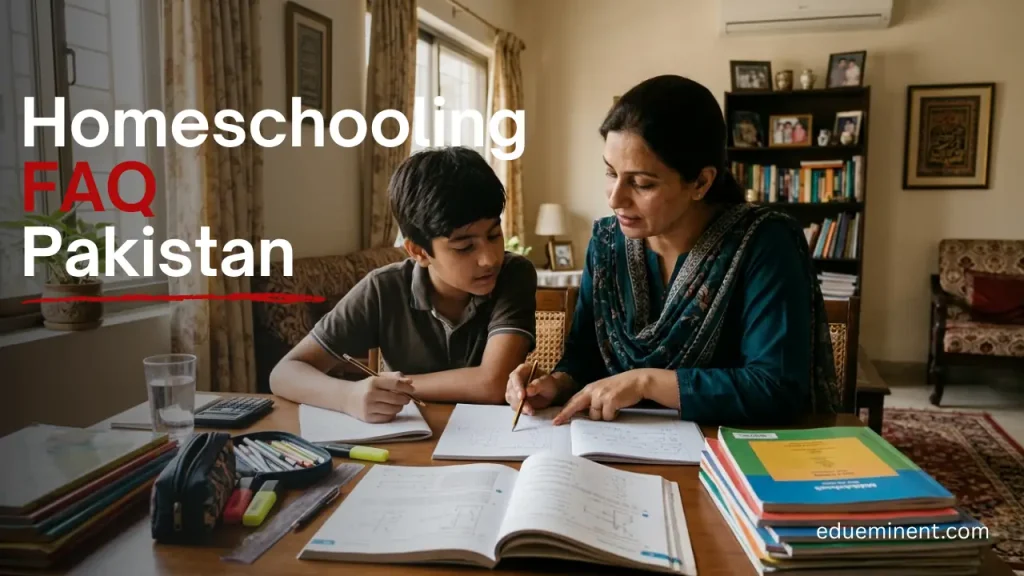
This comprehensive homeschooling FAQ Pakistan helps parents understand home education for children in grades 6 to 8. It covers legal considerations, curriculum options, teaching methods, costs, daily routines, examinations, social development, and future academic pathways, helping families make informed decisions about homeschooling.
Maybe the school run has become a daily battle. Maybe your child is bored in class, anxious about bullying, or simply learning very little. Whatever the reason, you’ve started wondering whether homeschooling could work for your family.
This homeschooling FAQ for Pakistan answers the questions parents ask most often when their child is in grades 6 to 8, from legal worries and curriculum choices to exams, friendships, and what happens if you change your mind. Some answers are simple. Others come with a “check your own province” warning, and we’ll point those out clearly.
The Basics: What Homeschooling Means in Pakistan
What is homeschooling?
Homeschooling means that a parent or guardian takes main responsibility for a child’s education at home, instead of sending them to a regular school every day. Parents may teach most subjects themselves, hire tutors for some, or use an online programme. The child follows a plan, completes lessons and is assessed, just not inside a classroom.
For grades 6 to 8, which cover roughly ages 11 to 14, homeschooling usually involves daily lessons in languages, Maths, science and social studies, plus religious education and some practical learning.
Is homeschooling legal in Pakistan?
The honest answer is that it is unclear and depends on where you live. Article 25A of the Constitution says the state shall provide free and compulsory education to children aged 5 to 16, in the manner decided by law. Provinces and the Islamabad Capital Territory have their own education laws and rules.
As far as we could find, no single clear national law is commonly cited that expressly permits or bans homeschooling. In practice, home-based learning sits outside the formal school registration system. That means there’s often no official permission form to fill in, and also no official recognition of your child’s progress at the middle school stage.
This is general information, not legal advice. Before you withdraw your child from school, check the current rules with your provincial education department, and speak to a lawyer if you want certainty. Rules can change, so don’t rely on a forum post from three years ago.
Why are parents in Pakistan considering homeschooling?
The reasons vary a lot. Some families are unhappy with the quality of teaching or very large classes. Some worry about bullying or unsafe school environments. Others have a child with a health condition, a learning difference, or a gift in a particular area that the school can’t support well.
Other parents want more time for religious learning, more flexibility because of work or travel, or a calmer pace than a heavy school routine allows. Many families also say that long commutes, rising fees, and exam stress pushed them to explore alternatives.
Is homeschooling common here?
It’s still much less common than regular schooling, and reliable national numbers are hard to find. You will find online parent groups and a few tutoring services that talk about it, but most children in Pakistan attend a school. That also means you may feel alone at first, and relatives may ask a lot of questions. Be ready for that.
Is Homeschooling Right for Your Family?
Who is homeschooling best suited for?
It tends to work best for families where at least one adult has regular time to plan lessons and sit with the child, where the child is willing to learn at home, and where there is a clear exam route for the future. A calm, organised household helps a great deal.
It can also suit children who need a different pace. A bright child may race ahead in Maths. A child who struggles with reading may need slower, gentler practice.
Who should think twice?
Homeschooling is hard if no adult can be around during study hours, if the child strongly resists learning at home, or if the family situation is stressed or unstable. It is also difficult if parents are hoping it will be an easier option than school. It isn’t easier. It’s simply different.
Be honest with yourself about the reasons. If the real problem is one unkind classmate or one poor teacher, changing sections or schools may solve it faster.
What does homeschooling cost?
Costs depend entirely on your choices. A family using provincial textbooks and free online lessons may spend far less than a family that hires several tutors or buys an international online programme. You aren’t paying school fees, but you may be paying for other things.
Think about these cost areas before you decide:
- Books, stationery, printing and internet
- Tutors for difficult subjects such as Maths, science or English
- Online lessons or a paid curriculum
- Sports, art or club fees so your child has activities outside the home
- Exam registration fees later on, if your child sits Matric or Cambridge exams as a private candidate
- The income you may lose if one parent works fewer hours
Don’t forget the last point. For many families, time is the highest cost.
How does homeschooling compare with regular school?
Neither is automatically better. Each one trades something for something else.
| Area | Regular school | Homeschooling |
| Pace | Set for the whole class | Can match your child’s speed |
| Official recognition | Clear and recognised | Depends on exams taken later as a private candidate |
| Friendships | Built in every day | Must be planned on purpose |
| Parent time | Less daily involvement | A large daily commitment |
| Cost | School fees, uniforms, transport | Books, tutors, programmes and lost income |
| Structure | Provided by the school | Created by you |
The table shows why preparation matters. Homeschooling gives freedom, but it also gives you the job of building everything a school normally provides.
What should the first month feel like?
Expect it to be bumpy. Your child may feel unsure, you may overplan, and the house may feel loud and untidy. That is normal. Use the first month to find a rhythm, not to prove that homeschooling is perfect. Keep lessons short, finish on time, and talk at the end of each week about what worked.
Can working parents homeschool?
Yes, but it takes planning. Some families split teaching between parents, use early mornings and evenings, or rely on a grandparent, a tutor, or a structured online course for part of the day. A middle school child can do some work independently, but they still need an adult to check progress, answer questions, and keep them on track.
If both parents are away all day and nobody else can supervise, regular school may be the safer choice.
Curriculum and Subjects for Grades 6 to 8
Which curriculum can I follow?
You have several options, and many families combine them. Here is a quick comparison.
| Option | What it is | Good for | Things to watch |
| Provincial textbooks | Books from your province’s textbook board | Families planning for Matric later | Quality varies, and teaching help may be limited |
| Cambridge Lower Secondary | An international programme used by many private schools for ages 11 to 14 | Families planning for O Levels | Resources and exams can cost more, and English is the medium |
| Online programmes | Structured courses taught through video and worksheets | Parents who need lesson plans | Check cost, internet needs and screen time |
| Mixed approach | Core books plus free videos, library books and tutors | Flexible families who like to adjust | Needs strong planning and good record keeping |
There’s no single best choice. Pick the option that matches your child’s future exam plan, your budget, and the time you can give.
Which subjects should a grade 6 to 8 student study?
A balanced middle school plan in Pakistan usually includes English, Urdu, Maths, general science, social studies or Pakistan Studies, Islamiat or religious education, and computer skills. Many families add art, a regional language, physical activity, and life skills.
If you plan to return to a regular school or sit Matric later, stay close to the subjects your target school or board expects. Ask for the subject list early, because that makes the transition much smoother.
Should lessons be in English or Urdu?
Use the language that matches your child’s future path, but don’t ignore the other one. If your child may go into an English medium school or take Cambridge exams, build strong English reading and writing now. If Matric is the goal, Urdu and Pakistan Studies need real attention.
Many homeschool families teach in both languages. Maths in English and Urdu reading in the evening work well in a lot of homes.
What if I’m weak in some subjects?
That’s completely normal. Nobody is an expert in everything. You can learn alongside your child, hire a tutor for one or two subjects, use trusted online video lessons, or join a small group where parents share the teaching. Maths and science usually need the most outside help at this stage.
You don’t have to know every answer. You do need to know how to find answers and how to check that your child truly understands.
How do I teach Maths, English and science at home?
Keep each subject simple and regular. For Maths, practise a little every day and go back to earlier topics when something feels shaky, because fractions, ratios and basic algebra build on each other. Ask your child to explain how they got an answer, not only what the answer is.
For English, make reading the base. Twenty minutes of daily reading, a short written summary, and a weekly piece of writing on any topic will do more than endless grammar sheets. Add spelling and vocabulary in small doses.
For science, use what is around you. Plants, water, electricity, kitchen mixtures, and the weather give you free experiments. After each activity, ask your child to write what they saw, what surprised them, and what they would test next.
How do I fit Islamiat, Quran, and values into the day?
Many Pakistani families choose homeschooling partly to give more time to religious learning and character building, and that fits naturally into a home plan. Set a regular slot for Quran reading, Islamiat lessons, and discussion of everyday manners, honesty, and service.
If you attend a mosque class or have a teacher visit, include that in your weekly timetable so it doesn’t crowd out other subjects. Whatever you choose, check what your target board or school expects for Islamiat, so your child isn’t surprised later.
What if my child has a learning difficulty or needs extra support?
Homeschooling can be a gentle option for some children with dyslexia, attention problems, or other learning needs, because lessons can move at their own pace. But it also demands more from you. Speak to a child psychologist, a special education teacher, or your doctor first, so you understand what your child needs.
Don’t try to handle everything alone. Ask for an assessment, use short lessons with clear steps, and plan regular progress checks. If your child needs therapy or specialist teaching, make sure it is part of the plan.
Daily Routine and Teaching Methods
How many hours a day does homeschooling take?
Much fewer than a school day. Because teaching is individual, most families find that three to five focused hours are enough for a grade 6 to 8 child, plus some reading and activity time. The exact number depends on the child’s age, the subjects, and your plan.
Don’t copy a school timetable hour by hour. A focused hour at home often covers what takes longer in a crowded classroom.
What does a sample week look like?
Here is one simple pattern. Adjust it to your family, your climate, and your power cuts.
| Time | Monday to Thursday | Friday | Saturday |
| Morning, first block | Maths | Maths and revision | Reading or project work |
| Morning, second block | English or Urdu | Science | Family or community activity |
| Late morning | Science or social studies | Islamiat or Pakistan Studies | Sports or outdoor play |
| After lunch | Reading, art or computer skills | Review the week, light activity | Free time |
Keep Sunday light. Many families use it to plan the next week.
How do I keep my child motivated?
Give your child some choice and some wins. Let them pick the order of subjects, choose a reading book, or select a project topic. Celebrate effort, and keep tasks short enough to finish.
Change the setting now and then. A science lesson in the garden, a Maths game with the grocery bill, or a library visit can bring a tired routine back to life. And if your child feels stuck, stop and ask why instead of pushing harder.
How do I handle discipline and screen time?
Treat homeschool hours as real school hours. Fix a start time, keep the phone out of reach, and agree on break times. Children who are used to school routines may test boundaries at first, and that’s normal.
Set clear screen rules. Online lessons are useful, but long hours of videos, games, and social media can quietly replace actual learning. Keep devices in a shared area and use parental controls.
How can I keep my child safe during online lessons?
Many homeschooling families use online videos, classes, and apps, so safety matters. Sit nearby when your child joins a live class, check who the teacher is, and don’t share personal details such as your address or school name. Use only trusted platforms, and keep passwords private.
Talk to your child about what to do if a stranger messages them or something upsets them. Promise that they won’t be punished for telling you. If you ever face threats or harassment online, keep screenshots and report it to the FIA cybercrime wing.
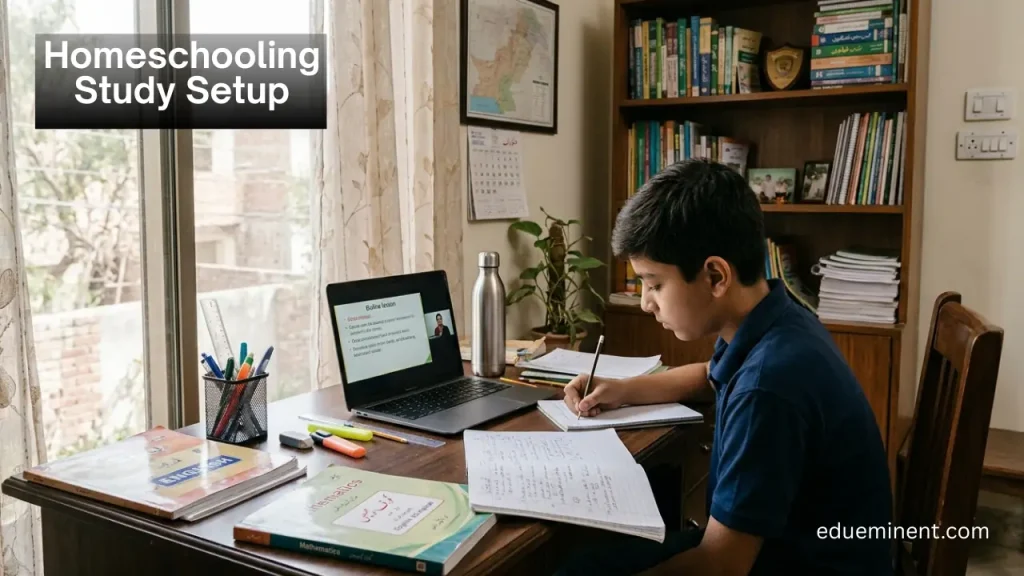
How do I look after my own energy as a homeschooling parent?
Burnout is real. Teaching, cooking, cleaning, and working can pile up fast, and tired parents lose patience. Build rest into the week. Share tasks with your spouse, use a tutor for the hardest subject, and give yourself a day with lighter lessons when you need it.
Talk to other homeschooling families, either in person or in online groups. Hearing that someone else had a bad week too is surprisingly helpful.
Exams, Records and Future Pathways
Will my child have to take exams in grades 6 to 8?
In most cases, there is no official board exam for a homeschooled child at this stage. Some provinces hold public exams in grade 8 for certain schools, but those are usually tied to registered schools. Check what applies in your area.
Even without official exams, you should test your child regularly. Short monthly quizzes, end-of-term papers, and written projects give you real information about progress.
How do I track progress and keep records?
Keep a simple file for each child. It should include a yearly plan, lists of books used, samples of written work, test results, and a short note about strengths and weak areas. A basic notebook or a folder on your computer is enough.
These records matter. If your child later joins a school, a tutor or a Cambridge centre, you can show what has been covered. They also help you spot problems early.
Can my child return to regular school later?
Often yes, but it depends on the school. Most schools will want to assess your child’s level before offering a place, usually through an entrance test and an interview. They may place your child in the grade that matches their age, or in a grade that matches their test results.
This is why records and a matching curriculum are so useful. Call your target schools early and ask exactly what they require for a child coming from home learning. Some schools are welcoming, and some are not.
What about Matric, O Levels and university?
Here, planning matters most. Boards of intermediate and secondary education in several provinces and the federal board accept private candidates for Matric, though the forms, documents, fees and deadlines differ from board to board.
Cambridge also accepts private candidates through authorised exam centres, including British Council centres in major Pakistani cities, with registration usually closing months before an exam session.
Because rules and dates change, check the official website or office of your chosen board or centre well before grade 9. Ask what documents a private candidate needs and what the age and attendance conditions are.
For university, the certificate matters. A recognised Matric, O Level or equivalent qualification keeps doors open. Don’t leave this question until your child turns 15.
Do I need to register my homeschool anywhere?
There isn’t one common national registration process for family homeschooling that we could verify. That can change, so call your provincial education department or district education office and ask what applies in your area. Keep a written note of who you spoke to and what they said.
Social Life, Wellbeing and Common Worries
Will my child miss out on friends?
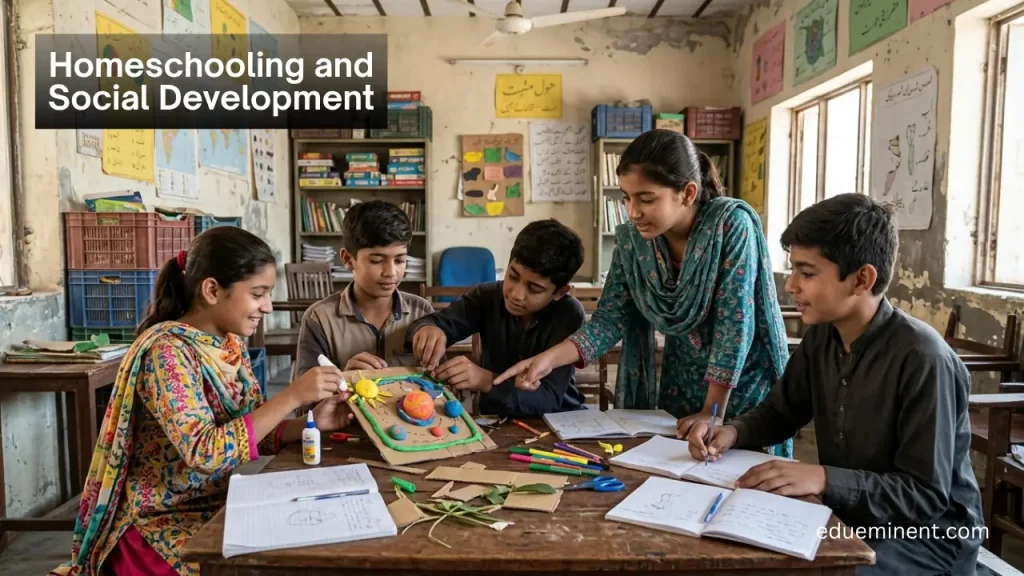
Not if you plan for it. Children aged 11 to 14 need friendships more than ever, and friendship doesn’t have to come from a classroom. Cousins, neighbours, sports clubs, community libraries, Quran or Arabic classes, art workshops and learning groups with other homeschool families all help.
Aim for regular contact, at least a few times a week, with children their own age. It should be planned, not left to chance.
Is homeschooling bad for socialisation?
It doesn’t have to be. Socialisation isn’t only about being in a big group. It’s also about learning to share, disagree politely, solve problems, and talk to people of different ages. Homeschooled children can learn all of this, but only if they’re given chances to practise.
Pay attention to quiet children in particular. A shy child can drift into isolation if nobody notices.
How will I know it’s not working?
Watch for patterns, not single bad days. Warning signs include a child who is always tired or low, constant fights over lessons, falling behind with no improvement, losing contact with friends, or a parent who is burnt out and resentful.
If you see these signs, pause and review. Talk to your child, speak to a teacher or counsellor, and try changing the routine, the curriculum, or the amount of outside help. Returning to school isn’t a failure. It’s a sensible decision if home learning isn’t serving your child.
What are the most common mistakes?
Most mistakes are small and fixable. Watch out for these:
- Copying a school timetable exactly instead of using time wisely
- Skipping tests and records because “we’re doing fine”
- Doing too much teaching alone and getting exhausted
- Ignoring English, Maths or exam planning until grade 9
- Leaving out friends, sport and outdoor play
- Comparing your child with other homeschoolers or school children
What should I tell relatives who disagree?
Stay calm and keep it simple. You can say that you have thought about it carefully, that you have a plan for study, exams and friendships, and that you will review it every term. Show them your records and your child’s work. Concrete proof usually works better than arguments.
How to Start Homeschooling: A Practical Plan
What are the first steps?
- Write down why you want to homeschool, and what you hope will improve.
- Check the current rules with your provincial or district education office.
- Decide the future route: Matric, Cambridge, or a mix.
- Choose a curriculum that matches that route.
- Test your child’s current level in English, Urdu, and Maths.
- Build a weekly timetable, including breaks, sport and social time.
- Gather books, stationery and a quiet study space.
- Try a trial term, then review honestly.
A trial term is a gentle way to begin. Don’t withdraw your child from school until you’ve checked the rules, sorted the exam path and spoken openly with them.
What resources can I use in Pakistan?
Public and school libraries, second-hand bookshops, children’s magazines, educational videos, free online lessons and community learning groups can all help. Keep an eye on quality. Not every free video is accurate, and not every paid course is worth the money.
Use museums, historical sites, parks and local workplaces too. A visit to a farm, a workshop or a printing press can teach more than a worksheet.
Should my child talk to someone about this decision?
Yes. At ages 11 to 14, children have strong opinions. Ask your child how they feel about leaving school, what they’ll miss, and what they hope for. A decision made together is far easier to carry out than one imposed on them.
Quick Answers to Common Homeschooling Questions
Can I homeschool just one child in the family?
Yes. Many parents homeschool one child who needs a different environment while others stay in school. Make sure that child doesn’t feel singled out or left behind.
Is homeschooling cheaper than private school?
It can be, but not always. If you use free resources and teach yourself, it’s cheaper. If you hire several tutors or buy a full online programme, the cost can come close to private school fees.
Can a homeschooled child join sports or clubs?
Yes. Community clubs, academies and private sports groups are usually open to children of all backgrounds. School teams may have their own rules, so ask directly.
How long should I try before deciding?
One full term, about three months, is a fair trial. Judge it on learning progress, your child’s mood and your own energy, not on how perfect the first week looked.
Where can I get help?
Start with your provincial education department, local boards, and exam centres for official information. For everyday support, look for other homeschool parents, experienced teachers, and your child’s own school counsellor.
Final Thoughts: Make a Plan, Not a Leap
Homeschooling in Pakistan can work well for the right family, but it isn’t something to start on impulse. The best decisions come from clear reasons, current information about the rules, a realistic daily plan, and an honest look at how your child is coping. Take it one term at a time, keep records, protect friendships, and don’t be afraid to change course.
If you’re still unsure, begin with the first steps in this homeschooling FAQ for Pakistan and write down your answers. Then talk to your child, call the education office, and see what you learn. A thoughtful start will make the whole journey easier.