This guide explores the homeschooling pros and cons for students in grades 6–8. It covers flexibility, personalised learning, family involvement, academic outcomes, costs, socialisation, parental commitment, homeschooling methods, legal requirements, and practical tips to help parents decide whether homeschooling is right for their child.
Choosing how your child learns is one of the biggest decisions a parent makes. Homeschooling has grown fast in recent years, and it is now more common than ever among middle school families. In fact, research shows that grades 6 through 8 have the highest homeschooling rate of any grade band in the United States.
If you are a parent of a sixth, seventh, or eighth grader, you may be wondering whether homeschooling is the right choice for your family. This guide walks through the real pros and cons of homeschooling, backed by current research, so you can make a confident and informed decision.
Choosing an international academic pathway gives students the flexibility to select a programme that fits their goals. O Level program and IGCSE provide a solid foundation at the secondary level, while A Level enables students to study selected subjects in greater depth.
These qualifications are commonly considered by students planning to continue their education at universities locally or overseas.
Another option is the International Baccalaureate (IB), which takes a broader approach to education and places emphasis on research, communication, critical thinking, and independent learning.
It encourages students to connect ideas across different subjects rather than focusing only on traditional examinations. This can suit learners who prefer a more skills-based and internationally focused academic experience.
For families researching O Level vs IGCSE, it is useful to look beyond the names of the qualifications. Although both offer internationally recognised secondary education, they can vary in curriculum content, subject availability, and assessment style.
Comparing these factors with A Level and International Baccalaureate (IB) can help students select a pathway that supports their academic interests and future ambitions.
What Is Homeschooling?
Homeschooling means teaching your child at home instead of sending them to a public or private school. Parents act as the main teacher, though many families also use online classes, tutors, and community co-ops to help.
Homeschooling is legal in every state, but the rules are different depending on where you live. Some states ask for very little, while others require testing, portfolios, or regular check-ins with a local school district.
For middle schoolers specifically, homeschooling often means a shift away from switching classrooms every fifty minutes and toward a more personalized, project-based approach to learning. This shift is a big part of why grades 6 through 8 have become such a common starting point for families new to homeschooling.
Why More Families Are Choosing Homeschooling Today
Homeschooling is growing quickly across the country. The National Home Education Research Institute estimates that more than 3.4 million children were homeschooled during the 2024 to 2025 school year. That number has grown steadily since before the pandemic.
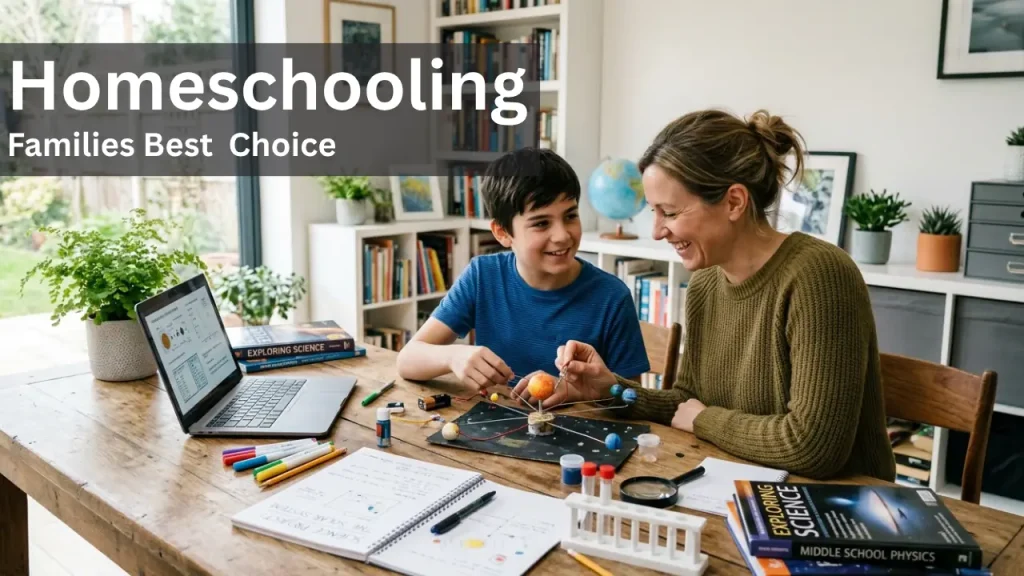
Interestingly, data from the National Center for Education Statistics shows that middle schoolers, those in grades 6 through 8, have the highest homeschooling rate of any age group. Many families make the switch right at this stage, often because of social pressure, bullying, or academic struggles that tend to show up during these years.
Pew Research Center surveys also found that a large share of homeschooling parents are unhappy with the academic quality of traditional schools. Others choose homeschooling for religious reasons, safety concerns, or simply to give their child more personal attention.
This shift is not limited to any one type of family. Homeschooling households today come from a wide range of backgrounds, income levels, and reasons for choosing this path, which has helped move the practice further into the mainstream.
Popular Homeschooling Methods and Styles
Homeschooling is not one size fits all. Families often mix and match different methods to fit their child’s learning style. Here are some of the most common approaches.
Traditional or Textbook-Based. This method looks the most like school, using structured textbooks, workbooks, and tests for each subject. It works well for parents who want a clear plan to follow every day.
Online or Virtual Programs. Many families use full online curriculum providers that offer video lessons, quizzes, and grading. This is a popular choice for parents who want structure but do not want to build lesson plans from scratch.
Unit Studies. Instead of teaching subjects separately, unit studies combine several subjects around one central theme, like ancient Egypt or the solar system. This can make learning feel more connected for middle schoolers.
Classical Education. This method follows a structured path through history, literature, and logic, often built around the stages known as the trivium. It appeals to families who want a strong academic foundation rooted in classic texts.
Unschooling. This child-led approach lets kids explore topics based on their own curiosity, with parents acting more as guides than teachers. It works best for highly motivated, self-directed learners.
Eclectic Homeschooling. Many families do not stick to just one method. Instead, they pick and choose pieces from several approaches based on what works best for each child and each subject.
Pros of Homeschooling
Homeschooling offers real benefits for many middle school students. Here are the biggest advantages parents report.
Flexible Schedule and Personalized Pace
One of the top reasons families choose homeschooling is flexibility. You can build a school day around your family’s needs instead of a fixed bell schedule. If your child understands a math concept quickly, they can move ahead.
If they need more time with reading comprehension, they can slow down without falling behind a whole class. This kind of personalized pace is hard to find in a traditional classroom with twenty-five or more students. Families with travel plans, medical needs, or unusual work schedules also find this flexibility hard to replace.
One-on-One Attention and Individualized Learning
In a typical classroom, one teacher manages a large group of students with many different needs. At home, your child gets direct attention every single day.
This makes it easier to spot learning gaps early, adjust teaching methods, and try different approaches until something clicks. Middle schoolers who learn best through hands-on projects, visual aids, or extra repetition often thrive with this kind of individual support. Over time, this focused attention can also build a stronger sense of confidence in subjects a child once found frustrating.
Stronger Family Bonds
Many homeschooling parents say their family grows closer through the process. Spending more time together during the school day, working through problems, and celebrating daily wins builds trust and connection.
For middle schoolers, who are often pulling away emotionally during this stage of growing up, this extra connection can be grounding and reassuring. Siblings who learn together also tend to develop closer relationships, since they share more of their daily routine.
Safer Learning Environment
Safety is one of the top reasons parents give for choosing homeschooling, according to national surveys. At home, families can avoid concerns like bullying, peer pressure, or exposure to drugs and violence that sometimes show up in middle school hallways.
This does not mean homeschooled kids are shielded from the real world forever. It simply means parents can introduce these topics on their own timeline, in a way that fits their family’s values. For a child who has already experienced bullying, this change of environment can also bring real emotional relief.
Freedom to Explore Interests and Talents
Homeschooling leaves room in the day for things a packed school schedule often crowds out. Kids can dive deeper into subjects they love, whether that is coding, art, music, sports, or science experiments.
This extra time can help a middle schooler discover a genuine passion years before their peers in a traditional classroom get the chance. Some families even build an entire unit study around a child’s current interest, which keeps motivation high.
Ability to Teach Personal Values and Beliefs
Homeschooling gives parents more control over the values, morals, and worldview their child is exposed to each day. For families with strong religious or cultural beliefs, this is often a major deciding factor.
Even non-religious families appreciate being able to choose how and when certain topics are introduced to their child. This level of control extends to media choices, health lessons, and the pace at which sensitive topics are covered.
Strong Academic Outcomes
Research on homeschooling outcomes is generally positive. Several studies have found that homeschooled students often score higher on standardized tests than their public school peers, sometimes by a wide margin. Homeschooled students also tend to report strong college acceptance rates.
Results vary by family and by how much effort goes into the program, but the overall academic track record for homeschooling is encouraging. Consistent, one-on-one instruction during the middle school years can also build stronger study habits that carry into high school.
Cons of Homeschooling
Homeschooling is not the right fit for every family. These are the most common challenges parents run into.
Time Commitment for Parents
Homeschooling is a serious time investment. Someone has to plan lessons, teach subjects, grade work, and manage the daily schedule, often while also working a job or caring for other children.
For many parents, this means restructuring their entire routine, and sometimes their career, around their child’s education. Even families who split duties between two parents often find the planning alone takes several hours each week.
Cost of Curriculum and Materials
While homeschooling can be cheaper than private school, it is not free. Families often pay for curriculum, textbooks, online classes, lab supplies, art materials, and extracurricular programs.
Estimates put average yearly homeschooling costs anywhere from a few hundred to a couple thousand dollars per child, depending on the curriculum and activities chosen. Costs can also rise quickly if a family enrolls in multiple online courses or hires a tutor for a difficult subject.
Limited Social Interaction If Not Managed Well
One of the most common concerns about homeschooling is socialization. Without a built-in group of classmates, some homeschooled middle schoolers may have fewer chances to build friendships and practice everyday social skills.
This concern can be reduced through homeschool co-ops, sports leagues, community classes, and local homeschool groups, but it does take extra planning and effort from parents. Families in rural areas or without a strong local homeschool network may find this harder to solve.
Less Access to School Resources
Public and private schools often offer resources that are harder to recreate at home, such as science labs, art studios, music programs, sports teams, and specialized staff like counselors or speech therapists.
Families need to seek out these resources elsewhere, which can mean extra cost, travel, or scheduling on top of daily lessons. Some communities offer shared homeschool resource centers, but availability varies widely by region.
Difficulty Teaching Advanced or Specialized Subjects
As kids move into middle school, subjects like algebra, physical science, and foreign languages get more advanced. Not every parent feels confident teaching these subjects at a high level.
Many families solve this by using online courses, tutors, or co-op classes taught by other parents or professionals, but it does add another layer of planning. Parents who struggled with a subject themselves in school often feel this challenge the most.
Risk of Parent Burnout
Being a full-time teacher and a parent at the same time is demanding. Many homeschooling parents describe feeling stretched thin, especially during the first year or two.
Without breaks, support, or a realistic schedule, burnout can affect both the parent’s well-being and the quality of the child’s learning experience. Building in regular days off and leaning on a co op community can help prevent this over time.
Fewer Built-In Extracurricular and Sports Options
Traditional schools come with built-in clubs, teams, and events. Homeschooled students can still join sports and activities, but families often have to search for outside leagues, homeschool athletic associations, or community programs instead of simply signing up through school. This extra step can be a real barrier for families with limited time or transportation options.
Common Myths About Homeschooling
Homeschooling comes with plenty of outdated stereotypes. Clearing up a few common myths can help you see the topic more clearly before deciding.
Myth: Homeschooled kids do not get socialized.
Fact: Most homeschooled middle schoolers spend time with friends through co-ops, sports leagues, church groups, and neighborhood activities. Socialization looks different than a school hallway, but it is rarely missing altogether.
Myth: You need a teaching degree to homeschool your child.
Fact: No state requires a teaching license for parents to homeschool. Many families use online programs, tutors, or co-op classes to cover subjects they are less confident teaching themselves.
Myth: Homeschooling is only for religious families.
Fact: While many religious families do homeschool, national survey data shows families choose homeschooling for many reasons, including academic concerns, safety, and a desire for more flexibility.
Myth: Homeschoolers cannot play school sports.
Fact: Many states allow homeschooled students to join public school teams under specific rules, and homeschool athletic associations also run their own leagues in most regions.
Myth: Homeschooling means sitting at a desk all day with a textbook.
Fact: Homeschool days often include field trips, hands-on projects, online classes, and community activities. A textbook is only one small piece of the picture for most families.
How to Get Started with Homeschooling in Grades 6 to 8
If you have decided to move forward, here is a simple path to help you launch your homeschool with confidence.
- Research your state’s homeschool laws. Requirements range from a simple notice of intent to regular testing, so knowing the rules first prevents problems later.
- Notify your school district if your state requires it. This step is often just a short form or letter, but skipping it can cause issues down the road.
- Choose a teaching method and curriculum. Think back to the methods covered earlier in this guide and pick a starting point that matches your child’s learning style.
- Set up a learning space and a loose daily schedule. It does not need to be fancy, just a quiet spot with the basics your child needs to focus.
- Connect with local homeschool groups or co-ops. Building this support network early makes socialization, resource sharing, and motivation much easier.
- Start with a trial period. Many families try homeschooling for one semester before committing to a full year, which takes the pressure off the decision.
Homeschooling vs Public School: Quick Comparison
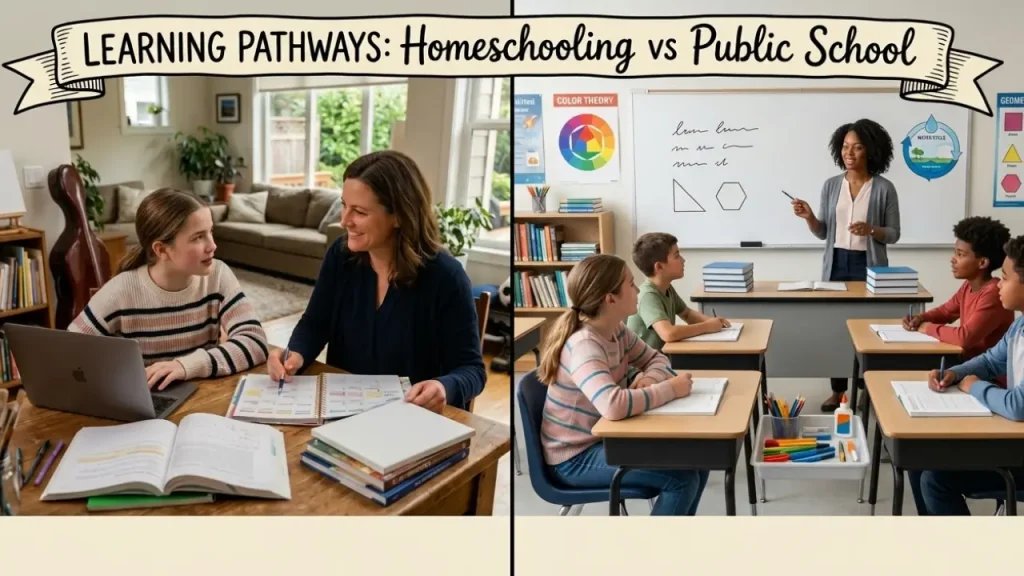
Every family weighs these factors differently. Use this quick side-by-side comparison to see where your priorities line up, then revisit the pros and cons above for more detail on the points that matter most to your household.
| Feature | Homeschooling | Public School |
| Schedule | Flexible, set by the family | Fixed school day and calendar |
| Class size | One student or a small group | Twenty or more students per class |
| Curriculum control | Chosen by the parent | Set by the school district |
| Yearly cost per child | A few hundred to a couple thousand dollars | Free, funded by taxes |
| Socialization | Requires extra planning through co-ops and groups | Built in through daily classmates |
| Academic pace | Personalized to the student | Set to the pace of the group |
| Parent time commitment | High, several hours a day | Low during school hours |
| Access to specialists | Must be arranged separately | Often available on site |
What Does a Typical Homeschool Day Look Like?
Every family sets up their day differently, but most middle school homeschool schedules follow a similar rhythm. Mornings usually start with core subjects like math, language arts, and science, since focus tends to be highest early in the day.
After a break for lunch and movement, afternoons often shift to social studies, electives, reading, or project-based work. Many families wrap up formal lessons by early afternoon, leaving time for extracurricular activities, co-op classes, or independent projects.
Because there is no commute, no long lunch line, and no waiting for twenty-five classmates to settle down, a full middle school workload can often be finished in three to five focused hours. This is one reason families with busy schedules find homeschooling manageable once they find their rhythm.
Is Homeschooling Right for Your Middle Schooler?
Before making a decision, sit down and honestly answer a few key questions as a family.
- Can I realistically commit several hours a day to teaching and planning?
- Does my child need a more flexible pace than a classroom can offer?
- Is my child struggling with bullying, anxiety, or peer pressure at school right now?
- Can my family afford curriculum, materials, and outside classes?
- Do I have access to co-ops, sports leagues, or community groups nearby?
- Am I comfortable learning and managing my state’s homeschooling requirements?
If most of your answers point toward flexibility, personalized attention, and a willingness to put in the extra planning time, homeschooling may be a strong fit. If time, cost, or access to a support network feel like major obstacles, it may be worth exploring a hybrid option first.
Tips for Homeschooling Success in Grades 6 to 8
If you decide to move forward, these practical tips can make the transition smoother for your whole family.
- Set a simple weekly schedule. A loose but consistent routine helps middle schoolers know what to expect each day without feeling boxed in.
- Join a local homeschool co op or group. Shared classes and group activities solve much of the socialization concern and give parents a support network.
- Mix curriculum with hands-on projects. Textbooks alone can feel dry for middle schoolers, so pairing lessons with real-world projects keeps interest high.
- Sign up for outside sports or clubs. Community leagues, homeschool athletic associations, and local classes fill the gap left by school teams.
- Check your state’s requirements every year. Rules can change, so a quick yearly review keeps your family in good standing.
- Build in breaks to avoid burnout. Short breaks during the day and full breaks during the year protect both your energy and your child’s motivation.
- Keep a portfolio of your child’s work. Saving samples, tests, and projects each year makes future transitions, including college applications, much easier.
Homeschooling Laws and Requirements
Homeschooling is legal in all fifty states, but each state sets its own rules. Some states only require a simple notice of intent, while others expect standardized testing, curriculum approval, or regular progress reports.
Before starting, check your state’s department of education website or a trusted state homeschool association for the exact requirements in your area.
Conclusion
Homeschooling comes with real benefits, like flexibility, personal attention, and a safer learning environment. It also comes with real challenges, like time commitment, cost, and the extra effort needed to build social opportunities. Grades 6 through 8 are a turning point for many families, since this is often when social pressure and academic demands increase at the same time.
There is no universal right answer. The best choice depends on your child’s needs, your family’s schedule, and how much support you can realistically offer. Some families find that a hybrid approach, mixing homeschooling with part-time enrollment or co op classes, offers the best of both worlds.
If you are still weighing your options, take time to talk with other homeschooling families in your area, review your state’s requirements, and consider trying it for one semester before committing to a full year. [INTERNAL LINK: How to Choose a Homeschool Curriculum for Middle School] can help you take the next step with confidence.
Frequently Asked Questions
Is homeschooling better than public school?
Neither option is automatically better. It depends on your child’s needs, your family’s schedule, and how much support you can offer at home. Homeschooling tends to work well for kids who need a flexible pace, while public school offers built-in structure and a ready-made social group. The right answer really comes down to what your specific child needs to thrive right now.
Do homeschooled students get into college?
Yes. Homeschooled students are accepted into colleges every year, and research shows they often report strong acceptance rates and test scores. Colleges typically ask for transcripts, test scores, and a portfolio of coursework, so keeping good records during grades 6 through 8 helps later on. Starting a simple record-keeping habit early makes the high school years far less stressful.
How many hours a day should a middle schooler homeschool?
Many families find that three to five focused hours a day covers a full middle school workload, since one-on-one teaching is more efficient than a full classroom day filled with transitions and group management. The exact number often depends on the child’s age, subject load, and how much independent work they can handle.
Can both parents work while homeschooling?
It is possible but harder. Some families split teaching duties, use online programs, hire tutors, or adjust work schedules to make it work. Many also lean on co-ops for a few days a week to free up time, or rely on grandparents and other trusted family members to help cover gaps.
What curriculum is best for grades 6 to 8?
There is no single best curriculum. Options include online programs, textbook-based courses, unit studies, and unschooling-style approaches. The right choice depends on your child’s learning style and your family’s goals for that year, and many families end up blending more than one method.
How do homeschooled kids make friends?
Through homeschool co-ops, sports leagues, church or community groups, neighborhood friends, and local classes. Many areas have active homeschool communities built specifically for this purpose, so a little research goes a long way. Online forums and local social media groups are often a good starting point for finding these communities.
Is homeschooling expensive?
It can be, but it is usually less expensive than private school. Costs vary widely based on the curriculum, extracurricular activities, and materials a family chooses, so budgets can be adjusted to fit almost any household. Many free and low-cost curriculum options also exist for families watching their budget closely.