This guide explores homeschooling in Islamabad for students in Grades 6 to 8. It covers local libraries, parks, tutoring options, examination pathways, socialisation opportunities, curriculum choices, and seasonal planning, helping parents build a practical homeschooling routine using the educational and community resources available in the capital.
Islamabad might be the easiest city in Pakistan to homeschool from, and most families here don’t realise it until they start looking. Between the British Council’s presence in the capital, a growing tutoring market, quiet public parks and a handful of underused libraries, the raw material for a strong grade 6 to 8 homeschool routine is already sitting around the city.
What’s missing usually isn’t resources. It’s a map of where they are and how to put them together into a week that actually works.
This guide is written specifically for Islamabad, with the city’s sectors, libraries, exam centres, and tutoring options woven into the general homeschooling picture for grades 6, 7, and 8. If you’re looking for the national rules on exams and pathways, that’s covered too, just filtered through what’s actually reachable if you live in the capital.
Homeschooling is an educational approach in which parents take responsibility for their children’s learning outside a traditional school environment. Understanding what homeschooling is can help families decide whether this learning approach suits their needs.
Why Islamabad Is a Reasonably Easy City to Homeschool In
A few things work in Islamabad’s favour compared to smaller cities. The British Council’s Pakistan operations run out of Islamabad among other centres, so private candidate registration and exam sittings for O Level and A Level are genuinely local rather than requiring travel.
The city also has a dense tutoring market- sector-wise home tutors- and a reasonable spread of public libraries, even if they’re smaller than families would like.
Islamabad’s planned sector layout also helps more quietly. Parks, mosques and community centres are built into almost every sector, which makes the “how do we get socialisation and physical activity” question easier to answer here than in a sprawling, less structured city.
None of this makes homeschooling effortless. It means the building blocks are closer at hand than families sometimes assume, and a lot of the early research this guide would otherwise ask you to do has already been done.
What Exams and Pathways Apply to a Homeschooled Child in Islamabad?
Before getting into local resources, it helps to know the exam landscape, since it shapes everything else about how you plan grades 6 to 8.
Islamabad falls under the Federal Board of Intermediate and Secondary Education for local Matric and Intermediate exams, since the capital territory, along with cantonments and Pakistan International Schools abroad, is served by FBISE rather than a provincial board.
If your family is leaning toward the Matric route, FBISE is the board your child would eventually register with as a private candidate for grade 9 and grade 10.
If your family is leaning toward Cambridge O Level or Pearson Edexcel IGCSE instead, registration runs through the British Council, and Islamabad is one of the cities where the British Council maintains a direct presence, alongside Lahore, Karachi, and several other major cities.
That local presence tends to make document submission and exam day logistics noticeably simpler than for families in smaller towns who have to travel.
For grades 6 and 7, neither system generally asks anything of a homeschooled child directly. Grade 8 is where families start paying closer attention, particularly around whether the FBISE-affiliated schools accept private candidates foGradede 8 content, which is worth confirming directly with the board rather than assuming either way.
Building a Grade 6 to 8 Routine Around Islamabad’s Layout
Islamabad’s sector system, whatever its frustrations for traffic, works nicely for a homeschool weekly rhythm. Most sectors have a park, a small market, and often a mosque within a short walk or drive, which makes it realistic to build movement, errands, and study into the same afternoon without a long commute eating the day.
A workable weekday shape for grades 6 to 8 often looks like focused academic work in the morning, when a child’s attention is freshest, followed by an afternoon built around one physical activity, one social or community activity, and independent reading or project time.
Islamabad’s relatively low traffic outside peak hours, compared to Karachi or Lahore, makes this kind of multi-stop afternoon more realistic here than in some other cities.
Using Islamabad’s Parks and Green Spaces
Fatima Jinnah Park in F9, often just called F9 Park, is large enough to support a proper weekly physical education slot, from walking and cycling to informal sports with other families.
Sector parks across E, F, G and I sectors offer smaller, closer options for a daily walk or a quick outdoor break between subjects, which matters more than it sounds for a child sitting through several hours of study.
Some families use nature walks on the Margalla Hills trails as an informal science and geography lesson, pairing a Sunday hike with a simple worksheet on local plants, rock formations, or the city’s layout seen from above. It costs nothing and covers ground a textbook chapter often can’t.
Setting Up a Study Space in an Islamabad Home
Most homes in Islamabad, whether an apartment in Bahria Town, a house in one of the older E or F sectors, or a smaller unit in Rawalpindi adjacent areas, can support a workable study corner without a major renovation. The goal is consistency, not size.
A north- or east-facing room, common in many Islamabad houses given the city’s layout, tends to offer gentler light through the morning study hours than a room facing directly into the afternoon sun, which matters during the hotter months when glare and heat can make a desk uncomfortable by early afternoon. If your home doesn’t offer that option, a simple curtain or blind solves most of the problem.
Islamabad’s dusty season, particularly before the monsoon and during windy spring weeks, means a study space benefits from being easy to wipe down and away from an open window that catches street dust. A small air purifier or simply closing windows during peak dust periods keeps a child’s focus and their allergies in better shape than many parents expect.
Keep the space stocked with the essentials:s, past papers, subject folders, a working printer or easy access to a print shop, since most sectors have small photocopy and printing shops within walking distance that can be useful for producing practice papers on short notice.
Homeschooling allows parents to take responsibility for their children’s education while creating a learning environment that suits their needs. Families planning this journey can explore a practical homeschooling planning guide to organise their approach.
Islamabad’s Libraries: An Underused Resource for Homeschoolers
Islamabad’s public libraries are smaller than many parents would like, but they’re genuinely useful for a grade 6 to 8 homeschool routine, and most families never visit them.
| Library | Location | Why it helps a grade 6 to 8 homeschooler |
| Quaid Public Library | F9 Park, Aiwan-e-Quaid Building | Houses the Model Children Library section, runs storytelling and reading events, general and kids collections |
| National Library of Pakistan | G5, Constitution Avenue area | Strong reference collection, useful for older grade 8 students working on a research-style project |
| Islamabad Public Library | H9 | Large general collection, popular with older students, a quiet place for focused reading sessions |
| National Resource Library | F7 Markaz | Multiple floors, hosts events including art and craft activities for children |
| Community libraries | I8, I10, G7, G8, G11, F11 sectors | Smaller, closer to home for many families, useful for a regular weekly reading habit |
A weekly library visit does more for a grade 6 to 8 homeschool routine than most parents expect. It builds an independent research habit, exposes a child to material beyond the family bookshelf, and gives structure to a week without adding academic pressure.
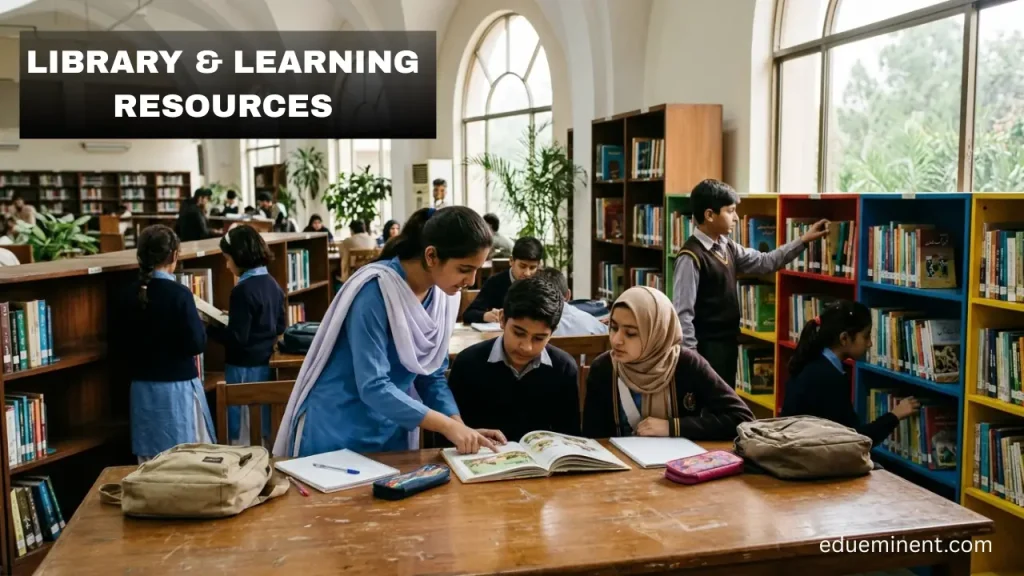
Many of these libraries run children’s events periodically, so it’s worth checking each one’s current schedule rather than assuming a fixed calendar.
Finding Tutors and Academic Support in Islamabad
Islamabad has a genuinely large home tutoring market, which is one of the more practical advantages of homeschooling from the capital rather than a smaller city.
Families across sectors from the older E and F sectors through to Bahria Town and DHA can generally find subject-specific tutors for mathematics, sciences, English and O Level or A Level preparation without much difficulty.
That size cuts both ways. More choice means more variation in quality, so a few checks are worth doing before committing to a tutor for a grade 6 to 8 child.
- Ask for a short trial session before committing to a term, since many tutoring services in the city offer this as standard.
- Check whether the tutor has specific experience with the syllabus you’re following, whether that’s the Pakistani national curriculum, Cambridge content, or a blended approach.
- Ask how the tutor handles a homeschooled child specifically, since teaching one-on-one or in a small home group differs from managing a full classroom.
- Confirm logistics early:y, home visits, online sessions, or a combination, since Islamabad’s spread-out sectors can mean real travel time between some areas.
For grade 8 in particular, many families in Islamabad bring in outside support for mathematics and the sciences, even if they’ve taught everything else at home, simply because these subjects benefit from a second, more specialised explanation as content gets harder.
Building Socialisation Into an Islamabad Homeschool Routine
The question relatives ask most often is some version of “but who will your child play with?” It’s a fair worry, and Islamabad actually offers more answers than families sometimes realise.
Mosque-based activities, Quran classes and community gatherings give a natural, regular point of contact with other children in most sectors. Sports academies and clubs, cricket, football, swimming and martial arts among them, are common across the city and give structured social time built around a shared activity rather than forced small talk.
Homeschooling-specific community groups also exist in Pakistan, often organised through Facebook groups or WhatsApp communities, and Islamabad families frequently find or start local meetups through these channels.
A single term of regular park meetups with two or three other homeschooling families can cover more of a child’s social needs than parents initially expect, especially once a rhythm builds.
Community library events, art exhibitions, and children’s reading sessions, mentioned above, add another low-pressure setting where a homeschooled child interacts with peers around a shared interest rather than a forced icebreaker.
A Simple Weekly Social Rhythm
- One mosque- or community-based activity, if this fits your family’s routine.
- One sports club or physical activity session with other children.
- One flexible social slot, a park meetup, a library event or a homeschool group gathering.
Three regular touchpoints a week are usually enough to keep a grade 6 to 8 child from feeling isolated, without turning the week into a logistics puzzle.
Museums, Landmarks and Free Learning Around the City
Islamabad’s public spaces double as a decent informal curriculum if you use them deliberately rather than just as weekend outings.
Lok Virsa, the National Institute of Folk and Traditional Heritage, offers a hands-on look at Pakistan’s regional cultures, useful for social studies and Pakistan Studies content in a way a textbook chapter rarely matches. The Pakistan Monument nearby ties directly into history lessons about the country’s founding and its provinces, since the monument’s design itself represents them.
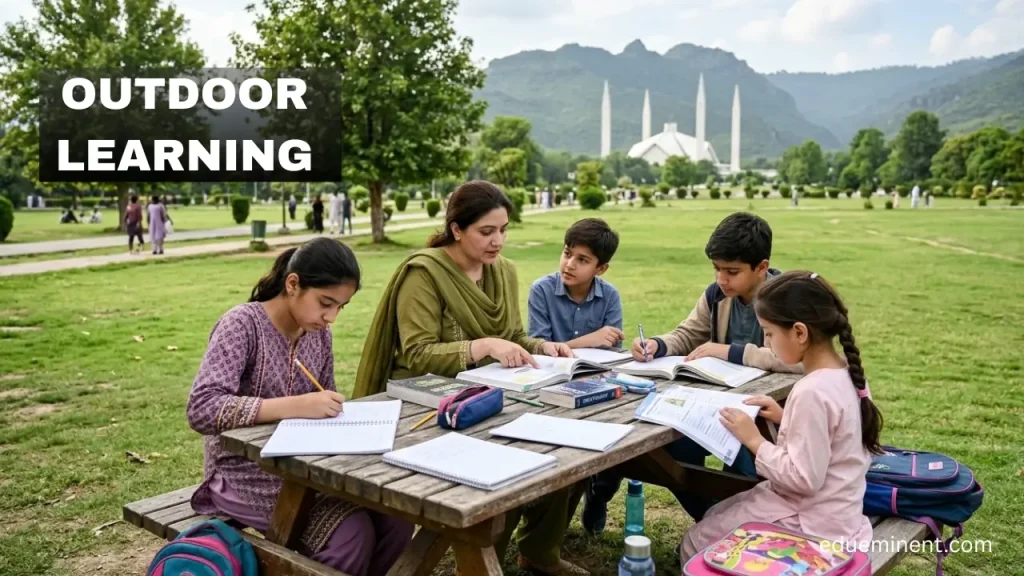
The Margalla Hills National Park, beyond its walking trails, offers real material for basic ecology and geography lessons, from observing local bird life to discussing how the hills shape the city’s climate and layout. Even a simple visit to Centaurus or another mall-science-themed activity centre, when available, can turn into a science lesson if a parent frames it with a few guiding questions beforehand.
None of these replace a structured curriculum. They add texture and real-world grounding to subjects that can otherwise feel abstract to twelve- or thirteen-year-olds, and Islamabad happens to have an unusually convenient set of them within a short drive of most sectors.
Choosing a Curriculum Path While Based in Islamabad
Families in Islamabad generally weigh the same core choice as homeschoolers elsewhere in Pakistan, Matric through the local board versus Cambridge O Level, but a few Islamabad-specific details are worth knowing.
| Consideration | Matric through FBISE | Cambridge O Level |
| Local board | Federal Board of Intermediate and Secondary Education, based in Islamabad | Registered through the British Council, which has a direct Islamabad presence |
| Document logistics | Generally straightforward for Islamabad residents, since FBISE is headquartered in the capital | Simplified by the local British Council office.ce, though document couriering rules still apply |
| Community support | Strong network of tutors and academies familiar with FBISE content across the city | Equally strong network for O Level and A Level, especially in sectors like F10, F11,and Bahria Town |
| Best suited to | Families wanting to stay within the local system with strong Islamabad-based support. | Families aiming at Cambridge A Level, study abroad, or English medium university programs |
Being based in the capital doesn’t force either choice. It does mean that whichever path you choose, the practical side- registration, tutoring, and exam logistics- tends to be smoother here than in cities without a direct British Council presence or FBISE proximity.
Choosing the right curriculum is an important part of providing structured education at home. Parents can explore different homeschool curricula in Pakistan to find an option that matches their children’s academic goals.
A Sample Grade 6 to 8 Weekly Plan Using Islamabad Resources
Putting the pieces together, here’s what a realistic week might look like for Gradede 7 homeschooler in Islamabad, built around the city’s actual resources rather than a generic template.
| Day | Morning focus | Afternoon activity |
| Monday | Mathematics and English, core lesson time | Sector Park walk, independent reading |
| Tuesday | Science and Urdu | Tutor session for mathematics or science |
| Wednesday | Social Studies or Pakistan Studies, project work | Library visit, Quaid Public Library or a nearer community library |
| Thursday | Mathematics and English, practice and review | Sports club or physical activity session |
| Friday | Islamiyat, lighter academic load | Mosque activity, family time |
| Saturday | Catch up work or a project, flexible | Museum, hike, or homeschool group meetup |
| Sunday | Rest, light reading | Family time, planning the week ahead |
Adjust the shape to your own family’s rhythm and your child’s energy levels. The point isn’t to copy this exactly; it’s to see how the city’s actual geography, a nearby park, a weekly tutor, a library ten minutes away, a Saturday museum trip, can structure a homeschool week without feeling like constant travel.
Costs of Homeschooling in Islamabad
Islamabad tends to run somewhat higher than many other Pakistani cities for tutoring and private services, reflecting the city’s overall cost of living, though it’s generally less expensive than the most premium areas of Karachi or Lahore for similar services.
Budget for three broad categories. Books and curriculum materials, whether local textbooks or Cambridge resources, form a relatively fixed cost. Tutoring, where used, varies widely by subject, sector, and the tutor’s experience level, and it’s worth getting a few quotes rather than accepting the first one.
Exam fees, for either FBISE private candidate registration or British Council O Level registration, are set nationally but still worth building into your yearly budget well in advance, since costs rise closer to deadlines.
The cost of homeschooling in Pakistan varies according to curriculum, tutoring requirements, examination fees, and learning materials. Understanding the cost of homeschooling in Pakistan can help families prepare a realistic education budget.
Weather and Seasonal Planning for an Islamabad Homeschool
Islamabad’s climate swings more than some parts of Pakistan, and a homeschool routine benefits from planning around it rather than fighting it every year.
Summer heat, particularly through June and July, makes outdoor activity best scheduled for early morning or after sunset rather than midday, so a family’s park or sports slot may need to shift earlier in the day during these months.
Winter, by contrast, brings some of Islamabad’s most pleasant weather for outdoor activities: cool mornings and clear afternoons that suit hikes, park visits, and open-air project work particularly well.
Monsoon season brings its own disruption:n, sudden heavy rain that can cancel an outdoor plan with little warning. Building a simple indoor backup activity into the weekly plan- a documentary, a board game with an academic angle, or catch-up reading- avoids the frustration of a week that falls apart because the original plan assumed clear skies.
Winter fog, which regularly affects Islamabad mornings in December and January, is also worth planning around if tutoring or library visits involve any travel, since visibility can genuinely slow down a morning commute across the city during these weeks.
Connecting With Other Homeschooling Families in the City
Islamabad’s homeschooling community is smaller than it is in some countries with a longer homeschooling tradition, but it’s active enough to be genuinely useful once you find it. Most connections happen through Facebook groups, WhatsApp communities, and word of mouth among parents at the same mosque, park, or tutoring centre.
Reach out early rather than waiting until your child feels isolated. A quick post in a Pakistan-wide or Islamabad-specific homeschooling group asking whether any other families in your sector or nearby are interested in a regular meetup often gets a faster response than parents expect, since many homeschooling families are actively looking for the same connection.
Once you find even one or two other families, a simple rotating arrangement works well. Meet weekly or fortnightly in a shared park, take turns hosting a small group activity, or pool resources for a subject none of the parents feels confident teaching alone.
Group settings like these also give children practice working alongside peers on a shared task, a skill that’s easy to underdevelop in a purely one-to-one homeschool setup.
Don’t wait for a perfect, fully formed co op to appear. Most of Islamabad’s homeschooling connections start small, two or three families meeting informally, and grow only as far as the families involved want them to.
Common Mistakes Islamabad Families Make When Homeschooling
A handful of patterns show up repeatedly among Islamabad-based homeschooling families, most of them avoidable with a bit of foresight.
- Assuming FBISE-specific rules apply everywhere in Pakistan, when other provinces run different boards with different requirements.
- Overlooking the city’s public libraries entirely, missing a free, nearby resource that could anchor a weekly reading habit.
- Choosing a tutor based purely on proximity rather than checking their experience with the specific curriculum being followed.
- Underestimating how much a simple weekly park or sports routine helps with both physical health and social contact.
- Waiting until grade 8 to think about FBISE or British Council registration steps, rather than getting familiar with the process while there’s no deadline pressure.
- Not connecting with other homeschooling families in the city early, then feeling isolated by grade 7 or 8 when the workload increases.
Final Thoughts
Homeschooling in Islamabad works well once a family stops treating the city as a blank backdrop and starts treating it as a set of tools. A nearby park, a ten-minute drive to a library, a tutoring market with real depth, and direct access to both FBISE and the British Council all sit closer than most families realise when they first start.
Build your grade 6 to 8 routine around what the capital already offers, keep half an eye on the exam and registration landscape ahead, and the years before O Level or Matric become a genuinely manageable stretch rather than a source of constant worry.
If you’re still shaping your family’s approach to exams and records, our companion guide on homeschooling exams in Pakistan is a useful next stop.
Frequently Asked Questions
Which board do homeschooled children in Islamabad usually register with for Matric?
Most families in the capital register with the Federal Board of Intermediate and Secondary Education, since Islamabad Capital Territory falls under FBISE’s coverage area. Confirm current private candidate rules directly with the board before planning your child’s grade 9 registration.
Does Islamabad have a British Council exam centre for O Level?
Yes, the British Council maintains a presence in Islamabad, alongside cities such as Lahore and Karachi, which makes private candidate registration and exam sittings for O Level and A Level more convenient for families based in the capital than for those in smaller towns.
Are there good libraries for homeschoolers in Islamabad?
Several, though they’re smaller than families sometimes expect. Quaid Public Library in F9 Park, which houses the Model Children Library section, the National Library on Constitution Avenue, and community libraries across sectors such as I8, I10, and G7 all offer useful, free resources for a regular reading habit.
How do homeschooled children in Islamabad get socialisation?
Through mosque activities, sports clubs, sector parks, library events, and homeschooling community groups that often organise through Facebook or WhatsApp. Islamabad’s sector layout, with a park and community space built into most areas, makes regular, low-effort social contact easier to arrange than in some other cities.
Is it easy to find tutors for grade 6 to 8 subjects in Islamabad?
Generally yes. Islamabad has a large home tutoring market covering most sectors, from mathematics and science tutors to O Level and A Level specialists. Ask about cost, hands-on experience, and check curriculum-specific experience before committing to a longer arrangement.
What free or low-cost learning resources does Islamabad offer beyond libraries?
Lok Virsa for cultural and social studies content, the Pakistan Monument for history, and the Margalla Hills trails for basic ecology and photography all offer free or low-cost, hands-on learning that complements a structured curriculum well.
Should we choose Matric or O Level if we’re based in Islamabad?
Either works well from the capital, since both FBISE and the British Council have a direct local presence here. Base the choice on your child’s strengths and your family’s longer-term plans, not on which is more convenient logistically, since both are reasonably convenient in Islamabad.
How much does homeschooling typically cost in Islamabad?
Costs vary by curriculum, tutoring needs, and exam registration fees, and Islamabad tends to run a little higher than smaller cities for tutoring services. Get current estimates from a few tutors and check the latest fee schedules from FBISE or the British Council before setting a yearly budget.