This homeschool planning guide for Grades 6 to 8 explains nine practical steps for organising a successful school year. It covers goals, legal requirements, curriculum, calendars, schedules, recordkeeping, assessment, flexibility, common mistakes, and planning timelines for middle school homeschooling.
If you are new to home education, it helps to understand what homeschooling actually involves. What Is Homeschooling? explains the basics and gives parents a clearer starting point.
A solid homeschool planning guide turns a vague idea of teaching your child at home into an actual, workable school year. This becomes even more important in grades 6 through 8, when subjects grow more specialized, workloads increase, and a child needs a plan that supports growing independence instead of daily improvisation.
Many parents jump straight to buying curriculum and skip the planning steps that make that curriculum actually work. The result is often a strong first month followed by a disorganized spring semester.
This guide walks through nine practical planning steps built specifically for middle school, along with a sample timeline, a common mistakes list, and answers to the questions families ask most often.
Getting started can seem confusing when you are choosing subjects, resources, and a daily routine. How to Start Homeschooling walks through the first steps in a simple and practical way.
Why Planning Matters More in Middle School
Elementary homeschooling often works with loose, flexible days built around read-alouds and hands-on activities. Middle school changes the equation. Grades 6 through 8 introduce pre-algebra, lab-based science, longer writing assignments, and research projects that build toward high school work.
A middle schooler also needs to build independent study skills before high school arrives. A homeschool planning guide for this age group has to balance two goals at once: covering more rigorous academic content and gradually shifting responsibility from parent to student.
Good planning reduces the daily decision fatigue that wears homeschool parents down by December. When the year, the semester, and the week are already mapped out, each school day becomes a matter of following the plan rather than inventing it from scratch every morning.
A good routine can make home learning easier to manage, especially as subjects and responsibilities increase. Homeschooling Routine offers practical ideas for creating a day that feels structured without becoming too rigid.
A clear plan also protects the relationship between parent and child. Instead of negotiating the schedule every single morning, both sides know what to expect, which frees up energy for actual teaching and learning rather than daily logistics.
Step 1: Reflect on the Past Year and Set Goals
Before opening a single curriculum catalog, take stock of where your child actually stands. Review last year’s work samples, test scores if you used any, and your own notes on what felt smooth versus what felt like a daily struggle.
Ask a few honest questions during this review.
- Which subjects did your child move through easily, and which ones needed constant support?
- Did your daily schedule actually get followed, or did it collapse by October?
- What skills does your child need most this year: stronger writing, more math confidence, better independence, or something else?
- What worked for you as the parent, in terms of your own energy and time?
Turn your answers into two or three specific goals per child rather than a long wish list. A goal such as complete pre-algebra with real understanding and write a five-paragraph essay independently is far more useful than a vague hope for a good year.
Step 2: Understand Your State’s Requirements
Every planning decision should sit on top of a clear understanding of your legal obligations. Homeschooling is legal in all fifty states, but requirements for notification, instructional hours, recordkeeping, and testing vary widely from state to state.
Check your state department of education website or a trusted organization such as the Home School Legal Defense Association for the current rules in your area. Note any deadlines for notice of intent, required subjects, or standardized testing directly on your planning calendar so they do not get missed once the year gets busy.
If your state requires a set number of instructional hours or days, work backward from that number when you build your calendar in Step 5. It is far easier to plan around a requirement from day one than to scramble to make up hours near the end of the year.
Step 3: Choose a Homeschool Method or Approach
A homeschool method is the general philosophy that shapes how you teach, and choosing one before selecting curriculum makes every later decision easier. Middle school families typically choose from a handful of common approaches.
Classical education organizes learning around stages of a child’s development and places heavy emphasis on logic, rhetoric, and the great works of literature and history. It suits families who want a structured, academically rigorous path.
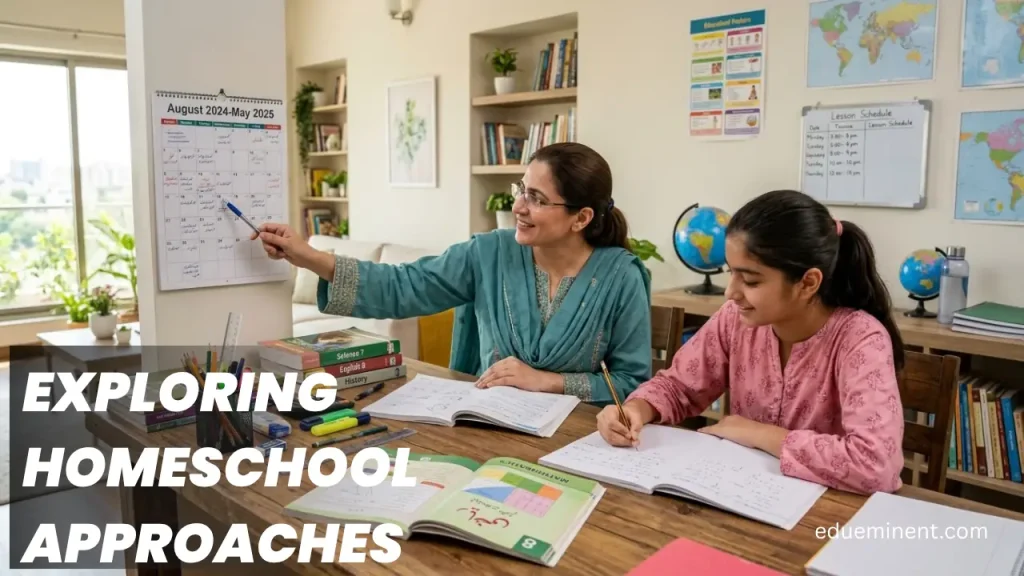
Charlotte Mason emphasizes living books, nature study, and short focused lessons over textbook drills. Some middle school families blend this approach with more traditional math and science instruction.
Unit studies combine subjects such as history, literature, and science around a single theme, which can make connections between subjects clearer for middle schoolers who are ready for deeper thinking.
Eclectic homeschooling mixes and matches curriculum and methods by subject, choosing whatever resource fits each child best rather than committing to one philosophy across the board.
Online or virtual school enrolls a student in a structured, often accredited program that provides lessons, assignments, and grading through a digital platform, which appeals to families who want more built-in structure with less daily planning.
None of these approaches is inherently better than the others. The right choice depends on your child’s learning style, your available planning time, and the goals you set in Step 1.
Step 4: Select Curriculum for Each Subject
Once you know your method, curriculum selection becomes far more targeted. Grades 6 through 8 generally require coverage across five core areas, along with room for electives that reflect your child’s interests.
| Subject | Typical Grade 6 to 8 Focus | Planning Tip |
| Math | Fractions, ratios, pre-algebra, and an introduction to algebra | Choose a program with a placement test so your child starts at the right level |
| Science | Life science, earth science, physical science, and lab-based experiments | Schedule experiment days separately from reading and worksheet days |
| Language Arts | Literature analysis, grammar, vocabulary, and multi-paragraph essays | Plan writing across the full year rather than cramming it into one semester |
| Social Studies | World history, geography, civics, and current events | Pair textbook reading with documentaries or primary source material |
| Electives | Foreign language, coding, art, music, or a skill-based hobby | Treat electives as a real subject with a weekly time slot, not an afterthought |
When comparing curriculum options, look for a clear scope and sequence, a placement test or entry assessment, and an answer key or grading tool that will save time during the busy months of the year. A curriculum that requires you to build lesson plans from scratch every week rarely survives a full school year without burnout.
Budget matters here too. Curriculum costs for a middle schooler can range from nearly free, using library books and free online resources, to several hundred dollars for a full boxed program with grading support. Decide on a rough budget per subject before browsing options, so an appealing but expensive program does not derail your plan for the rest of the year.
Step 5: Map Out the School Year Calendar
With goals, requirements, and curriculum in place, the next step is turning all of it into an actual calendar. Start by deciding how many weeks you plan to school and where your breaks will fall.
A typical homeschool year runs thirty-six weeks, though this can flex based on your state’s requirements and your family’s rhythm. Many families build in a shorter week around holidays and plan a longer break in the summer along with one or two shorter breaks during the school year.
Once your weeks are set, divide your curriculum into that timeframe. If a math program has one hundred eighty lessons and you plan for thirty-six weeks, that comes out to five lessons a week, which becomes your built-in pacing guide.
- Mark state testing windows, co-op schedules, and family travel on the calendar before finalizing anything else.
- Build in one buffer week per quarter to absorb sick days, unexpected schedule changes, or a lesson that simply takes longer than planned.
- Decide now whether you will school year-round in shorter stretches or follow a more traditional school year, since this affects how you divide curriculum.
Step 6: Build a Weekly and Daily Schedule
A yearly calendar tells you what to cover, while a weekly schedule tells you when. For grades 6 through 8, block scheduling tends to work better than a rigid hour-by-hour timetable, since middle schoolers can handle longer, more focused blocks of work.
A sample weekly structure might rotate core subjects through the morning and reserve afternoons for electives, projects, or independent reading. Some families teach four core academic days and reserve a fifth day for field trips, co-op classes, or project-based work.
Daily schedules for this age group generally include three to five hours of focused academic time, noticeably less than a full traditional school day, since there is no commute, passing periods, or whole-class management to account for. Build a simple daily checklist your child can follow with minimal supervision, which supports the independence goal that matters so much in middle school.
A Sample Weekly Schedule for Grades 6 to 8
Seeing a full week laid out can make block scheduling much easier to picture. The sample below reflects a four-day core academic week with a fifth day set aside for projects and electives.
| Day | Morning Block | Afternoon Block |
| Monday | Math and language arts | Science reading and notes |
| Tuesday | Math and language arts | Social studies and current events |
| Wednesday | Math and language arts | Science lab or hands-on experiment |
| Thursday | Math and language arts | Writing project or research work |
| Friday | Co-op class, field trip, or electives | Free reading and catch-up time |
This structure keeps the two most sequential subjects, math and language arts, consistent every day, while rotating the remaining subjects across the week to prevent any single afternoon from feeling overloaded.
Planning When You Have Multiple Children in Different Grades
Many homeschool households are not planning for a single middle schooler in isolation. Balancing a grade 6 to 8 student alongside younger or older siblings adds another layer to the planning process, though it is very manageable with a bit of structure.
Look for subjects that can be taught together across ages, such as science, social studies, or read-aloud literature, using the same core content with different follow-up work for each child’s level. This single largest time saver lets you deliver one lesson instead of two or three separate ones for subjects that do not depend heavily on grade-specific sequencing.
Math and core language arts skills, on the other hand, usually need to stay separate by grade level, since these subjects build in a strict sequence. Plan a rotating schedule where you give direct instruction to one child while another works independently, then switch, so each child gets focused attention without requiring a parent to be in two places at once.
- Group science, history, and read-aloud time by family rather than by individual grade whenever the content allows it.
- Give your grade 6 to 8 student more independent blocks so you can focus direct teaching time on younger children who need closer supervision.
- Stagger start times slightly, letting an older middle schooler begin independent work first while you get a younger child settled.
How Much Time to Budget for Planning Itself
Planning takes real time, and underestimating it is a common source of frustration. A thorough initial planning process, covering goals, curriculum research, and calendar building, typically takes eight to twelve hours spread across several weeks rather than a single weekend.
Ongoing planning during the school year is much lighter. Most families spend thirty minutes to an hour each week reviewing the coming week’s lessons and adjusting for anything that shifted, plus a slightly longer session at the end of each quarter to review progress and make bigger adjustments.
Treating planning as an ongoing, recurring task rather than a one-time event at the start of the year keeps the whole system running smoothly and prevents the kind of drift that leaves a plan feeling irrelevant by winter.
Step 7: Set Up a Recordkeeping and Portfolio System
Recordkeeping is often the most neglected part of a homeschool planning guide, yet it matters for both legal compliance and your own peace of mind. Decide on your system before the year starts rather than trying to reconstruct records months later.
A simple system usually includes an attendance or hours log, a list of subjects and materials covered, and a portfolio of representative work samples collected throughout the year.
Many states only require basic documentation, but a thorough record also helps if your child later transfers to a traditional school or applies for programs that ask for a transcript.
Choose a format that you will actually maintain, whether that is a physical binder, a simple spreadsheet, or a dedicated homeschool planning app. The best recordkeeping system is the one that gets used consistently, not the most elaborate one.
Step 8: Plan for Assessment and Progress Checks
Assessment in middle school should do more than assign a grade. It should tell you whether your child is ready to move forward or needs more time on a concept before building on it.
Plan short, regular check-ins rather than relying only on end-of-unit tests. A quick weekly review of completed work, combined with a brief conversation about what your child found easy or difficult, often reveals more than a formal test score.
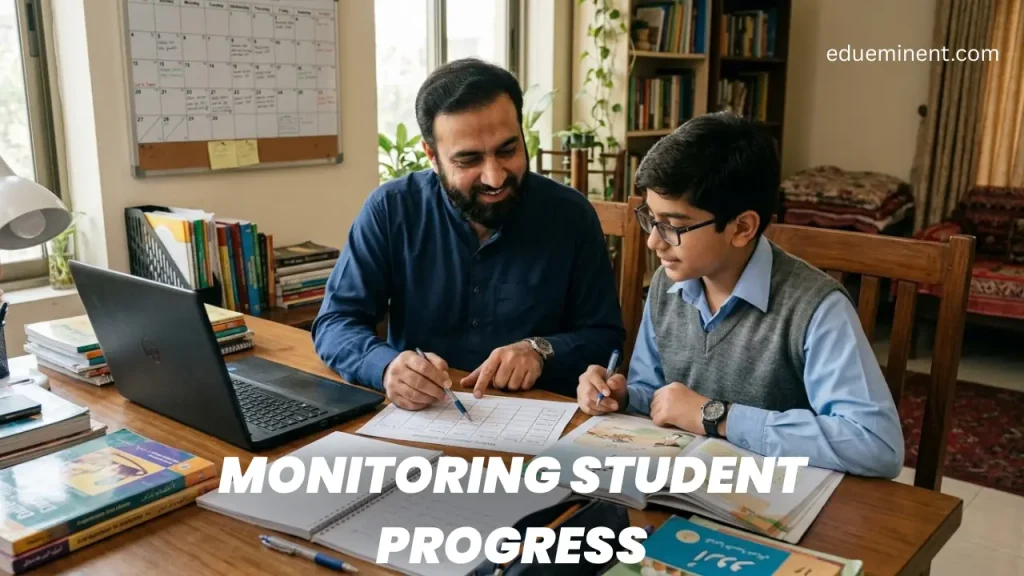
If your state requires standardized testing, schedule it well in advance and choose a test aligned to the standards your curriculum already covers. Informal assessments such as portfolio review, oral narration, or project presentations work well alongside or instead of formal testing where your state allows it.
Step 9: Build In Flexibility and Buffer Time
No homeschool year unfolds exactly as planned, and building flexibility into your plan from the start prevents small disruptions from turning into a sense of failure. Illness, travel, curriculum that takes longer than expected, and simple burnout are normal parts of any school year.
Buffer weeks, built in earlier in Step 5, absorb most of this naturally. Beyond that, permit yourself to adjust the plan itself partway through the year if a curriculum choice or schedule clearly is not working, rather than forcing the original plan to succeed out of stubbornness.
A homeschool planning guide should function as a flexible framework, not a rigid contract. The families who stick with homeschooling long term are usually the ones who treat their plan as a living document that gets revisited and adjusted every few months.
Sample Planning Timeline Before the School Year Starts
Spreading your planning work out over several weeks, rather than trying to finish it all in one weekend, produces a stronger, more realistic plan. The timeline below reflects a typical eight-week runway before a fall start date.
| Timeframe | Planning Focus |
| Eight weeks before | Reflect on the previous year and set two or three goals per child |
| Seven weeks before | Research your state’s requirements and note any deadlines |
| Six weeks before | Choose or confirm your homeschool method or approach |
| Five weeks before | Select and order curriculum for each core subject |
| Four weeks before | Map out the full year calendar, including breaks and buffer weeks |
| Three weeks before | Build your weekly schedule and a sample daily checklist |
| Two weeks before | Set up your recordkeeping and portfolio system |
| One week before | Do a trial run of one school day and adjust anything that felt off |
Common Planning Mistakes to Avoid
Even well-intentioned parents run into a handful of predictable planning mistakes each year. Watching for these ahead of time can save weeks of frustration later.
Overloading the schedule. Packing every subject, elective, and extracurricular into one semester often leads to burnout by the second month. Prioritize the goals from Step 1 and treat everything else as optional.
Skipping the placement test. Starting a curriculum at the wrong level, whether too easy or too difficult, creates frustration that could have been avoided with a short assessment before the year begins.
Ignoring buffer time. A calendar with no room for sick days or slow weeks eventually falls apart, leaving a parent feeling behind even when the actual learning is going fine.
Choosing curriculum before setting goals. Buying an appealing program before deciding what your child actually needs often results in a mismatch that becomes clear only after the money is spent.
Never revisiting the plan. A plan made in August should not be treated as fixed and final. Checking in every month or quarter keeps the plan aligned with what is actually happening in your homeschool.
Confusing a busy day with a productive day. A packed schedule can feel productive while actually spreading attention too thin across too many subjects. Review whether each block of time is producing real progress toward your Step 1 goals, not just filling the calendar.
Copying another family’s plan exactly. A schedule or curriculum list that works beautifully for one family may not fit your child’s pace, your work schedule, or your home environment. Use other families’ plans as inspiration, then adjust them to your own situation.
Choosing Between a Traditional School Year and Year-Round Homeschooling
Most families default to a traditional school year that mirrors the local public school calendar, with a long summer break and shorter breaks around holidays. This structure has real advantages, including easier coordination with co-ops, community classes, and extended family schedules.
Year-round homeschooling spreads the same total instructional time across the full calendar year in shorter stretches, often with a pattern such as six weeks on and one week off.
Families who choose this approach usually like the shorter, more frequent breaks, which can reduce burnout and prevent the long summer learning gaps that sometimes show up after a traditional break.
Neither approach is objectively better for grades 6 through 8. A family with strong ties to a co op or sports league that follows the traditional calendar will likely find that structure easier to manage, while a family that values flexibility and shorter breaks throughout the year may prefer the year-round model. Whichever you choose, apply it consistently to your Step 5 calendar so lesson pacing lines up with your actual break pattern.
Conclusion
A strong homeschool planning guide is not about creating a perfect, unchangeable document. It is about giving your family enough structure to move through grades 6 through 8 with clear goals, a realistic calendar, and curriculum that actually fits your child.
Work through the nine steps in order, starting with reflection and goals rather than curriculum shopping, and revisit your plan every few months rather than waiting until problems pile up.
With a clear plan in place, middle school homeschooling becomes far less about daily improvisation and far more about steady, confident progress toward high school.
Keep a copy of this homeschool planning guide handy as you move through each step, and treat your finished plan as a starting point rather than a finished product.
The families who feel most confident about homeschooling grades 6 through 8 are rarely the ones with the fanciest planner. They are the ones who planned with intention, then stayed willing to adjust as the real school year unfolded.
Frequently Asked Questions
When should I start planning my homeschool year for grades 6 to 8?
Most families benefit from starting six to eight weeks before their intended start date, which gives enough time for curriculum orders, placement testing, and calendar planning without last-minute pressure.
How many hours a day should a middle schooler spend on schoolwork?
Most students in grades 6 through 8 need roughly three to five hours of focused academic time per day, though this varies by child, curriculum, and how many subjects are combined into shared reading or discussion time.
Do I need to follow a strict daily schedule?
No. Many successful homeschool families use block scheduling or a general daily rhythm rather than a rigid hour-by-hour timetable, especially once a middle schooler can manage some independent work.
What if my child falls behind the plan?
Falling behind a self-created plan is common and not a sign of failure. Use your buffer weeks, adjust the pacing, or revisit whether the curriculum or method still fits your child’s needs.
Do I need a separate homeschool planner or app?
A dedicated planner or app can help, but a simple spreadsheet or paper calendar works just as well as long as you use it consistently to track goals, lessons, and records.
How do I know if my homeschool plan is actually working?
Look for steady progress through the curriculum, a child who can explain what they learned, and check-in times that feel manageable rather than stressful. Struggling in all three areas usually signals it is time to adjust the plan.
Should I plan the entire year at once or just one term at a time?
Many experienced homeschool parents plan the full year at a broad level, such as pacing and breaks, but only plan lessons in detail one term or quarter at a time, since details are easier to adjust closer to the actual weeks.