This homeschool checklist for grades 6 to 8 helps parents organise every important part of middle school homeschooling. From legal requirements and curriculum selection to schedules, assessments, recordkeeping, social activities, and high school preparation, it provides a practical framework for keeping your homeschool organised.
If you are new to home education, it helps to understand what homeschooling actually involves. What Is Homeschooling? explains the basics and gives parents a clearer starting point.
Middle school is a strange in-between stage. Your child is too old for picture books but not quite ready for high school level essays. If you are homeschooling a sixth, seventh, or eighth grader, you already know that the just-wing-it approach that worked fine in elementary school starts to fall apart around this age.
Subjects get more specific, workloads get heavier, and colleges eventually start caring about what happened during these years. This middle school homeschool checklist walks you through everything you need for grades 6 through 8, from legal paperwork to curriculum choices to keeping your kid social and motivated.
Whether you are new to homeschooling or switching from a traditional classroom partway through middle school, use this as your master reference so nothing important slips through the cracks.
Why Middle School Homeschooling Needs Its Own Checklist
Elementary homeschooling is mostly about building habits: reading daily, learning basic math facts, developing curiosity about the world. Middle school changes the equation.
Kids in grades 6 through 8 are shifting from concrete thinking toward abstract reasoning, which means subjects like pre-algebra, earth science, and world history start asking them to connect ideas rather than simply memorize facts.
It is easier to plan lessons when you know what you want your child to achieve. Homeschooling Goals explains how parents can set realistic academic and personal goals for the year.
At the same time, most states begin paying closer attention to homeschool compliance once a child reaches a certain age, and colleges, yes, even years away, will eventually want a transcript that reflects this period.
That combination of academic complexity and administrative weight is exactly why a general homeschool checklist often falls short for this age group.
You need something built for the specific realities of grades 6 to 8: more subjects, more independence, more recordkeeping, and more decisions about where all of this is heading.
How Middle Schoolers Learn Differently Than Younger Kids
Before jumping into logistics, it helps to understand what is actually changing inside your child’s head during these years, since that shapes almost every other decision in this checklist.
Somewhere between age eleven and fourteen, most kids develop stronger executive function skills such as planning, managing time, and organizing multi-step tasks. This is exactly why middle school curriculum starts asking for longer writing assignments, multi-step math problems, and research projects rather than single worksheet exercises.
A child who breezed through elementary homeschooling on pure enthusiasm may suddenly need actual study skills, and that transition can feel bumpy for both of you.
One of the first questions parents have is how lessons, assignments, and assessments are managed at home. How Does Homeschooling Work? gives a closer look at how a typical homeschooling setup can operate.
Learning style also becomes more visible during these years. Some middle schoolers thrive with visual aids such as diagrams, timelines, and color-coded notes.
Others learn best by talking through a problem out loud or by physically manipulating something, like using algebra tiles to understand equations rather than only reading about them.
Paying attention to which mode your child gravitates toward will make several later decisions in this checklist, especially curriculum choice, much easier.
Step 1: Know Your State’s Homeschool Laws and Requirements
Before you plan a single lesson, confirm what your state legally requires for homeschooling grades 6 to 8, because requirements vary widely and ignoring them can create real problems later.
In the United States, homeschool law is set at the state level rather than federally, so what applies to a family in Texas may look nothing like what applies to a family in New York.
Some states ask for almost nothing beyond a simple notice of intent. Others require standardized testing, portfolio reviews, or even approval of your curriculum plan before the year begins.
Before you build your middle school homeschool plan, check on the following:
- Notice of intent: does your state require paperwork filed each year, and by what deadline?
- Instructional hours or days: many states set a minimum number of school days or hours per year.
- Subject requirements: some states list specific subjects you must cover at this grade level.
- Assessment rules: standardized testing, portfolio evaluation, or teacher assessment may be required periodically.
- Recordkeeping expectations: attendance logs, work samples, and grade records may need to be kept for a set number of years.
- Withdrawal procedures: if your child currently attends public or private school, you may need to formally withdraw them in writing.
Your state department of education website is the most reliable source, and homeschool advocacy organizations such as the Homeschool Legal Defense Association also publish regularly updated state-by-state summaries. Bookmark these pages and check them every year, since homeschool laws do get revised.
How Much Oversight Should You Expect
State approaches generally fall into a few broad categories, and knowing which category your state falls into helps you set realistic expectations for how much paperwork this checklist step will actually involve.
Some states take a fairly hands-off approach, asking for little more than a one-time or annual notice that you are homeschooling, with no mandated testing or curriculum approval. Other states sit in the middle, requiring a notice of intent plus periodic assessment such as a standardized test or portfolio review every year or two.
A smaller number of states take a more involved approach, requiring curriculum approval, qualified teaching credentials for the parent, or regular contact with a local school official.
None of these categories should discourage you from homeschooling through middle school. They simply determine how much of this checklist step is a quick formality versus an ongoing task you will revisit throughout the year.
Step 2: Set Your Homeschool Goals for Grades 6 to 8
Write down specific academic and personal goals for each year of middle school so your curriculum choices and schedule have a clear purpose.
Middle school covers three formative years, and without written goals, it is easy to drift through them, reacting to whatever curriculum catalog you last opened. Sit down before the school year starts and answer a few honest questions.
What academic level does your child need to reach by the end of eighth grade to feel ready for high school work? What skills, beyond textbook subjects, do you want them to build, such as typing, note-taking, or managing their own calendar?
Are there passions or talents you want to give more room to explore during these years, since middle school is often a good stretch of time for that kind of exploration?
Goals do not need to be elaborate. A simple example: by the end of eighth grade, my child will be comfortable writing a five-paragraph essay, will have completed pre-algebra, and will have joined one ongoing extracurricular activity. Having something like that written down gives you a measuring stick for the rest of this checklist.
Step 3: Cover the Core Subjects for Middle School
A complete grade 6 to 8 homeschool plan should include language arts, math, science, social studies, and at least one elective every year, with the depth increasing each grade.
Middle school curriculum should look noticeably more advanced by eighth grade than it did in sixth. Here is a general breakdown of what most homeschoolers cover at each grade level, though you should adjust based on your child’s pace and your state’s specific requirements.
| Subject | Grade 6 Focus | Grade 7 Focus | Grade 8 Focus |
| Language Arts | Grammar review, paragraph writing, novel studies | Essay writing, vocabulary building, literary analysis | Persuasive and research writing, classic literature |
| Math | Pre-algebra basics, ratios, fractions | Pre-algebra or start of Algebra 1 | Algebra 1 completion or geometry introduction |
| Science | Life science or earth science | Physical science | Introduction to biology or physical science review |
| Social Studies | World geography or ancient history | World history or civics | US history or basic government |
| Electives | Art, typing, foreign language intro | Foreign language, coding, music | Foreign language, personal finance, health |
Beyond these core subjects, most families also fold in physical education and health, even if informally through sports or family activities, since several states expect it to be part of the yearly plan.
One thing worth mentioning here: the exact sequence of math and science topics does not need to match a public school scope and sequence exactly. Homeschooling gives you room to slow down where your child struggles and move faster where they show strength.
What matters more than hitting a specific chapter number is that your child leaves eighth grade with a solid foundation in pre-algebra, comfortable paragraph and essay writing, and enough science and history exposure to handle high school-level coursework.
Step 4: Choose Curriculum and Learning Materials
Pick curriculum based on your child’s learning style and your own teaching bandwidth, not just on what is popular among other homeschoolers.
There is no shortage of curriculum options for middle school homeschoolers, from full boxed curriculum that plans every day for you, to open and go workbooks, to fully online programs where your child works independently on a screen. Each comes with trade-offs worth thinking through.
Boxed or all-in-one curriculum works well if you want less daily planning and prefer a structured, done-for-you approach. Online programs suit kids who enjoy working somewhat independently and like immediate feedback on their work.
Living books and unit study approaches, where you build lessons around real literature and hands-on projects rather than textbooks, fit families who want more flexibility and enjoy a less scripted day.
Before committing to a full year of any curriculum, look for a sample chapter or trial period. Middle schoolers have strong opinions by this age, and a curriculum that bores them or moves too fast will cause more friction than any parent wants to deal with daily.
It also helps to ask in local or online homeschool groups what other families with similarly aged kids are actually using and liking, rather than relying only on marketing descriptions.
Matching Curriculum to How Your Child Learns
Going back to the learning style differences covered earlier in this checklist, a visual learner may do best with a curriculum heavy on diagrams, videos, and color-coded workbooks, while a child who learns by discussion might respond better to a program built around read-aloud material and guided conversation rather than silent worksheet time.
It is also worth being honest about your own capacity as the teaching parent. A curriculum that requires two hours of daily hands-on instruction per subject is not realistic if you are also managing younger siblings or working outside the home.
Choosing a slightly more self-directed program is not a lesser choice; it is simply matching the tool to your actual daily reality rather than an idealized one.
Step 5: Build a Realistic Weekly Schedule
Design a weekly schedule that blocks time for core subjects, independent work, and breaks, while staying flexible enough to adjust when a lesson runs long.
Middle schoolers generally need less direct teaching time than younger kids but more independent study time. A common structure many families use is a morning block for subjects that need parent involvement, such as math instruction or writing feedback, followed by an afternoon block where the student works independently on reading, projects, or review.
A sample weekly structure might look like this:
- Monday through Thursday: three to four hours of academic work split between morning instruction and afternoon independent study.
- Friday: a lighter academic load reserved for projects, field trips, catch-up work, or enrichment activities.
- Daily: fifteen to twenty minutes of reading for pleasure, kept separate from assigned literature.
Build in buffer time. Lessons almost always take longer than planned, especially with a subject your child finds difficult, and a schedule with no slack becomes a source of daily stress rather than structure.
It also helps to schedule the hardest subject for whenever your child has the most energy and focus, which for many middle schoolers is mid-morning rather than right after breakfast or late in the afternoon.
Step 6: Track Attendance, Hours, and Records
Keep a simple, consistent record of attendance, instructional hours, and completed work throughout the year, since most states require this and it protects you if questions ever come up.
Recordkeeping sounds tedious, but for middle school it becomes genuinely important because these grades start feeding into the academic history that colleges and future employers may eventually ask about. At minimum, most homeschoolers keep track of the following:
- Attendance or instructional days, logged either daily or weekly.
- Total hours per subject, if your state has a minimum hour requirement.
- A portfolio of work samples from each subject, updated regularly rather than assembled all at once at year-end.
- Grades or assessment results, even if you use a simple pass or needs improvement system rather than letter grades.
- A running list of books read, projects completed, and any standardized test scores.
A simple spreadsheet or a dedicated homeschool planning app works fine for this. The goal is not perfection; it is consistency. A messy but complete record beats a beautiful one that stops updating in November.
Step 7: Plan for Assessment and Grading
Decide early in the year how you will assess progress in each subject, since middle school work is complex enough that we will know it when we see it is no longer a reliable method.
By middle school, most homeschool parents move toward more formal assessment than they used during the elementary years. This might include chapter tests that come with your curriculum, periodic quizzes you create yourself, graded writing assignments, or standardized tests if your state requires them.
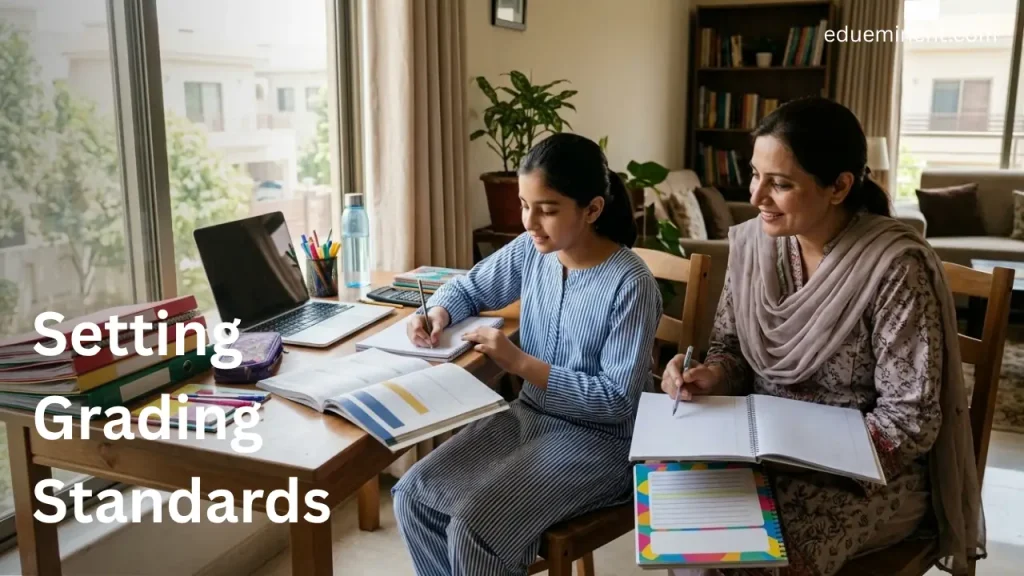
Consider using a simple letter or percentage grading system starting around seventh grade, even if grades do not officially count for anything yet. This gets your child used to the idea of grades before high school, when grades genuinely do start mattering for transcripts and, eventually, college applications.
If your state requires periodic standardized testing, look into practice tests ahead of time so the format itself is not a surprise on test day. Many kids who know the material still struggle the first time they encounter a timed, multiple-choice format if they have never practiced it before.
Step 8: Add Social and Extracurricular Activities
Build regular social and extracurricular opportunities into your middle schooler’s week, since socialization concerns are among the most common worries raised about homeschooling at this age.
Middle school is a socially important stage of development, and this is often the number one concern raised by relatives, friends, or the homeschooler themselves. The good news is that homeschoolers today have more options than ever for building an active social life outside of a traditional classroom.
Look into local homeschool co-ops, which often meet weekly and offer group classes in subjects like science labs, art, or foreign language alongside a built-in peer group.
Community sports leagues, scouting programs, church or community youth groups, and local library programs also offer regular, age-appropriate social contact. Many areas also have homeschool-specific sports leagues that let homeschoolers compete much as public school students do.
Aim for at least one regular, ongoing activity that puts your middle schooler around peers on a consistent basis, rather than only occasional playdates or one-off events. Consistency matters more than volume here.
One weekly commitment your child genuinely enjoys will do more for their social development than several sporadic activities squeezed in whenever schedules happen to align.
Building Independence and Study Skills
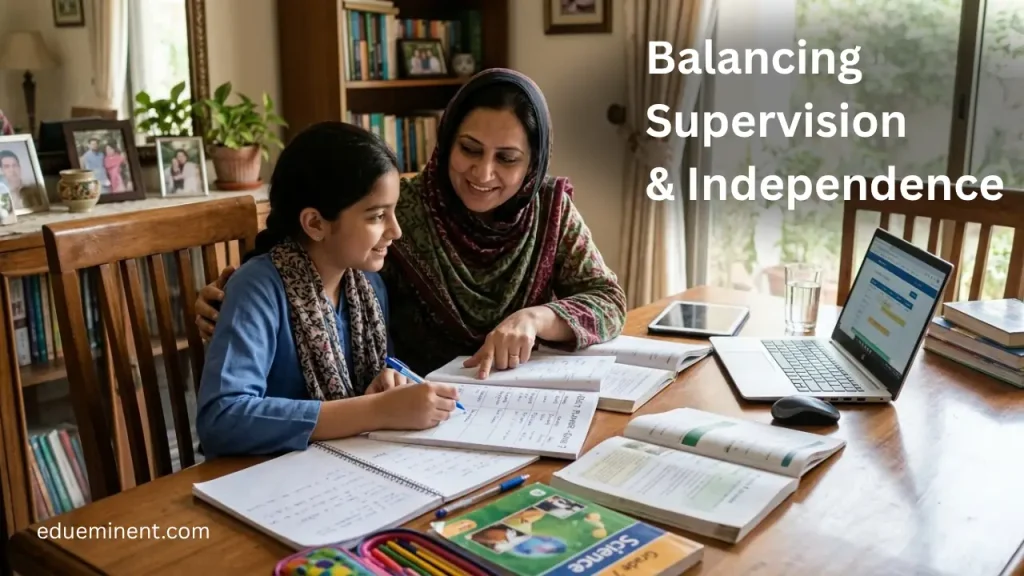
Use grades 6 through 8 to gradually hand your child more ownership over their own learning, since arriving at high school without any independent study habits makes that next transition much harder.
Practical ways to build this include letting your seventh grader plan their own study order for the day within a set time block, teaching basic note-taking during a history or science lesson rather than only providing worksheets, and having your eighth grader manage their own assignment calendar with occasional check-ins rather than daily reminders from you.
This handoff should be gradual and forgiving. Expect some missed assignments and forgotten deadlines along the way, since that is genuinely part of how executive function skills develop.
A middle schooler who learns to recover from a missed deadline at home, with a supportive parent nearby, is far better prepared than one who first encounters that experience alone in a college dorm room.
Step 9: Prepare for the High School Transition
Start laying groundwork for high school during eighth grade, including course planning, transcript basics, and any placement testing your local high school or homeschool program might require.
Eighth grade is the year to start thinking seriously about what comes next, even if your family plans to continue homeschooling through high school. If you are considering enrolling your child in a public or private high school afterward, contact the school directly during eighth grade to ask about their specific requirements for homeschooled transfer students, since these vary widely by district.
If you plan to continue homeschooling into high school, start a basic transcript now. Note completed courses, especially any that could count as high school credit if your eighth grader is working ahead in math or foreign language.
Some students complete Algebra 1 in eighth grade, which often counts toward their eventual high school math credits, so keeping that record from the start avoids scrambling to reconstruct it later.
It is also worth having an honest conversation with your child about their interests and strengths heading into high school. Are they drawn toward a particular subject area? Do they seem ready for more independent, self-directed learning, or do they still need significant parent involvement?
These observations will shape how you structure high school, whether that means a fairly traditional curriculum, dual enrollment options, or a more project-based approach.
Quick Reference: Printable Middle School Homeschool Checklist
Use this condensed checklist as a quick, printable reference to confirm you have covered every major area of your middle school homeschool plan.
☐ Confirmed state homeschool requirements and filed any required paperwork
☐ Set written academic and personal goals for the year
☐ Planned core subjects: language arts, math, science, social studies, plus at least one elective
☐ Chosen curriculum that fits your child’s learning style
☐ Built a weekly schedule with buffer time
☐ Set up a system for tracking attendance, hours, and work samples
☐ Decided on a grading and assessment approach
☐ Scheduled at least one regular social or extracurricular activity
☐ Started or updated a transcript, especially for eighth grade
☐ Reviewed high school options and requirements if applicable
Common Mistakes to Avoid When Homeschooling Grades 6 to 8
The most common middle school homeschooling mistakes involve underestimating recordkeeping, ignoring socialization, and sticking with a curriculum that clearly is not working.
Even organized, well-meaning parents run into predictable problems during these years. Waiting too long to start recordkeeping is one of the biggest ones, since trying to reconstruct a year of attendance and grades from memory in June is far harder than logging it weekly as you go.
Another common mistake is assuming socialization will happen naturally without any planning. It usually does not, especially in areas with fewer homeschool families nearby, which is why building at least one consistent activity into the schedule matters so much.
Sticking too long with a curriculum that clearly is not working is a third frequent issue. Middle schoolers are old enough to tell you honestly when something is not clicking, and it is worth listening rather than pushing through an entire year out of sunk cost thinking. Switching curriculum midyear is not a failure; it is often exactly the adjustment a struggling student needs.
Finally, many parents underestimate how much independent work capacity grows during these years and either hover too closely over every assignment or, at the opposite end, hand off too much responsibility too fast. Middle school is a gradual handoff period, not an all at once shift to full independence.
Conclusion
Homeschooling grades 6 through 8 asks more of both parent and student than the elementary years did, but it does not need to feel overwhelming once you break it down into manageable pieces.
Start with your state’s legal requirements, build a subject plan that covers the core areas at an appropriate depth, choose a schedule and curriculum that actually fits your child, and do not skip recordkeeping or social opportunities along the way.
Every middle school homeschool journey looks a little different, and that is genuinely one of the strengths of homeschooling rather than a weakness. Use this checklist as a flexible framework rather than a rigid rulebook, revisit it each year, and adjust as your child grows and your family’s needs change.
By the time eighth grade wraps up, you will have covered the academic basics and given your child real practice in the kind of independent thinking and self-direction that will serve them well in high school and beyond.
If you found this checklist useful, explore our High School Homeschool Planning Guide for what comes next, or our Homeschool Curriculum Comparison to start narrowing down your options for the year ahead.
Frequently Asked Questions
How many hours a day should a middle schooler homeschool?
Most middle schoolers need three to five hours of focused academic work per day, though this varies by state requirements and by how efficiently a student works independently versus how much direct instruction a subject requires.
Do I need to follow my state’s public school curriculum for homeschooling grades 6 to 8?
No, in most states you have significant freedom to choose your own curriculum and sequence, as long as you meet any state-mandated subject or hour requirements, though a small number of states do require approval of your plan.
What if my child is behind grade level in a subject?
Focus on meeting your child where they currently are rather than forcing grade-level material that is causing frustration, since one of homeschooling’s biggest advantages is the ability to slow down and rebuild a shaky foundation before moving forward.
How do I give my homeschooled middle schooler grades?
A simple system, whether letter grades, percentages, or a basic complete and needs improvement scale, works well starting around seventh grade, mainly to build familiarity with formal assessment before high school.
Can homeschoolers participate in public school sports or clubs during middle school?
This depends on your state and local district policy, since some states legally require public schools to allow homeschooled students to participate in extracurricular activities while others leave it up to individual district discretion.
What is the best way to handle socialization concerns for middle school homeschoolers?
Build at least one consistent weekly activity, such as a co-op, sports team, or community group, since regular, ongoing contact with peers tends to matter more for social development than occasional larger events.
Should I start high school transcripts in eighth grade?
Yes, especially if your eighth grader is completing any courses that could count for high school credit, such as Algebra 1 or a foreign language, since documenting this now saves significant effort later.
How much does homeschooling grades 6 to 8 typically cost?
Costs vary widely, from nearly free using library resources and free online materials to several hundred dollars per year for boxed curriculum, and more for online programs or co-op tuition, so it is worth setting a budget before shopping for materials.